Table of Contents
- Why Access to Specialized Sports Equipment Changes Community Recreation
- Types of Specialized Sports Equipment That Fit Public Parks
- ADA Compliance and Inclusive Design in Park Fitness Zones
- Commercial Basketball Hoop Installation for Parks and Schools
- Choosing Durable Outdoor Sports Equipment for Parks
- Procurement, Grants, and the Bid and Quote Process
- Maintenance Schedules for Illinois Climates
- Conclusion
- Frequently Asked Questions
Last Updated: September 27, 2026
Why Access to Specialized Sports Equipment Changes Community Recreation
Access to specialized sports equipment for parks and recreation is the difference between a park that gets used and a park that gets ignored. When a city invests in the right gear, residents of every age and ability level find a reason to show up. At Sports Vista USA, we work with homeowners, schools, churches, and recreation departments who are trying to stretch limited budgets and still deliver facilities that hold up.
The stakes are higher than most people assume. Public health researchers and parks advocates have long argued that the built environment shapes whether people move at all, and a court with a sagging net or a cracked backboard quietly tells families to go somewhere else.
Types of Specialized Sports Equipment That Fit Public Parks
Specialized sports equipment for parks and recreation falls into two broad categories: freestanding fitness stations and court systems. Both need to survive unsupervised public use, so durability and low maintenance matter more than novelty. For most parks departments, the court system is where the budget and the traffic concentrate, and basketball is the anchor.
Freestanding Fitness Stations and Outdoor Fitness Courts
An outdoor fitness court is a clustered arrangement of freestanding fitness stations that deliver a full-body workout without machines, electricity, or staff supervision. A typical layout includes cardiovascular equipment like elliptical trainers and stationary bikes alongside resistance training stations for pull-ups, leg press, and core work.
Court Systems: Basketball First, Then Multi-Sport
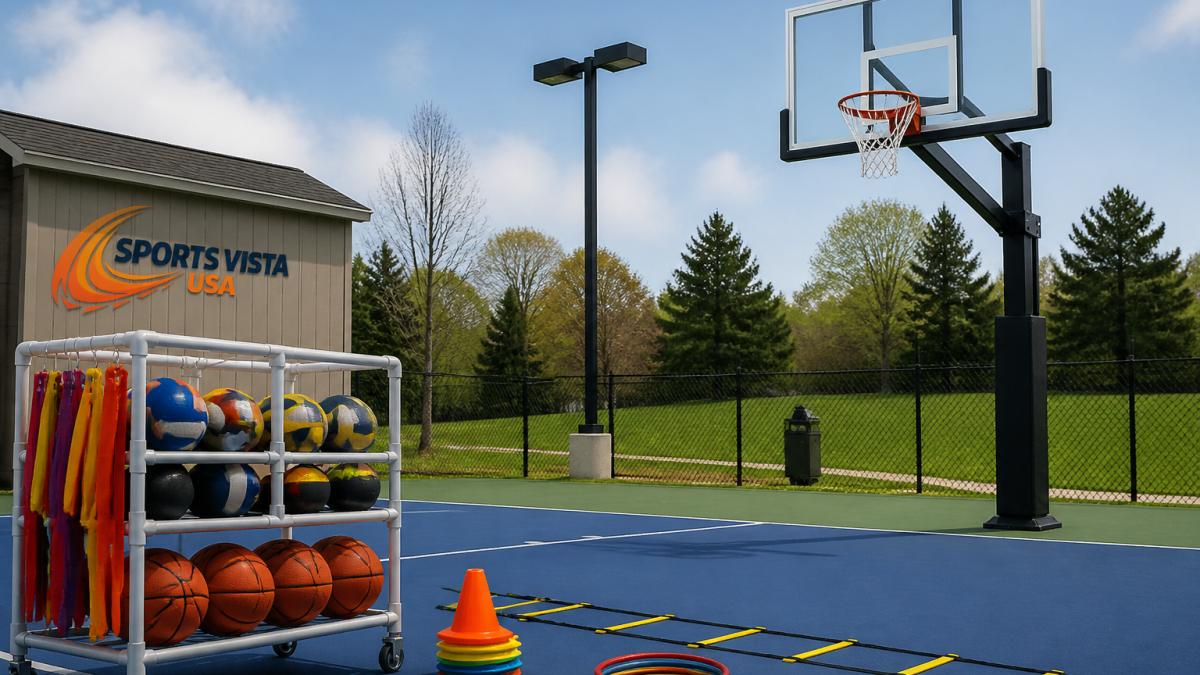
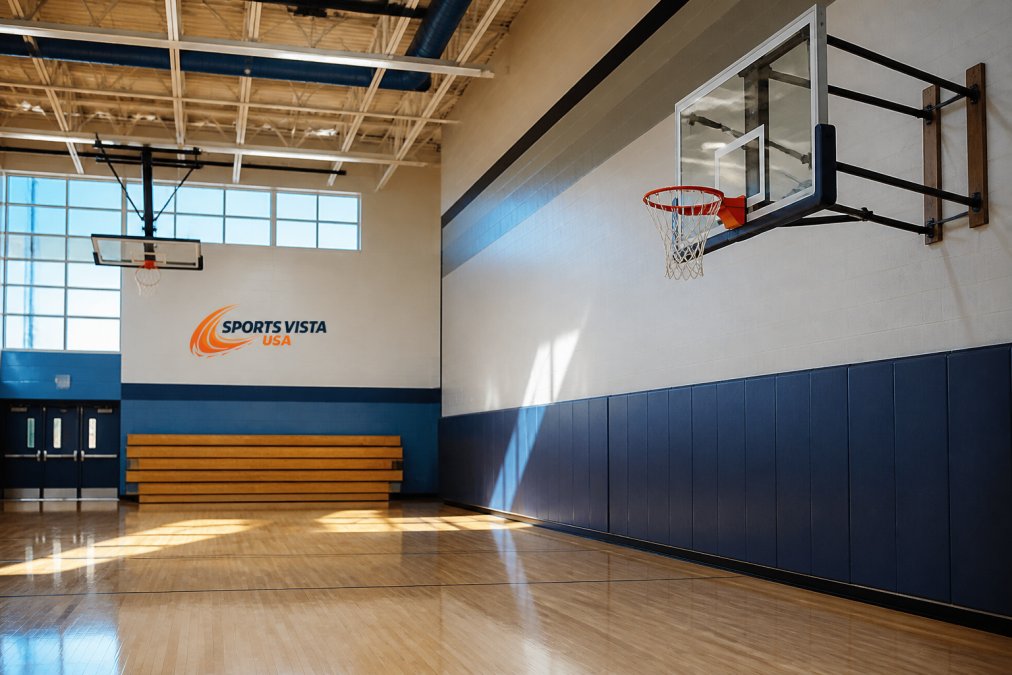
Court sports drive the heaviest traffic in most public facilities, and basketball remains the workhorse. A park that offers a quality outdoor basketball court, a volleyball setup, and a pickleball surface covers nearly every age group in a single footprint.
- In-ground vs. portable. In-ground goals are concrete-anchored and built for heavy daily use at schools, parks, and churches. Portable systems with a wheeled base suit rental programs, shared gyms, and layouts that need to move. If the court is permanent, in-ground is the right call; if the site is temporary or multi-use, portable wins.
- Backboard size and material. Larger backboards give shooters more bank surface and read as "regulation" to players, while smaller boards suit tight footprints and youth programs. Acrylic and glass boards play truer; steel and aluminum boards take abuse with less risk of shattering.
- Adjustability. Fixed-height goals are simpler and cheaper to maintain. Adjustable goals let one court serve youth, high school, and adult leagues without a second installation, which matters when a parks department is trying to stretch a single pad across multiple programs.
| Equipment Type | Best For | Key Durability Feature |
|---|---|---|
| Freestanding fitness stations | Adult fitness, senior mobility | Powder-coated steel, no moving parts |
| Multi-sport net system | Shared court space | Crank-adjustable aluminum posts |
| In-ground basketball goals | Heavy daily use, schools, parks | Concrete-anchored, institutional grade |
| Portable basketball systems | Rental programs, flexible layouts | Wheeled base, adjustable height |
Court Accessories That Finish the Project
A goal alone does not make a court. Court markings, padding, and lighting turn a slab into a facility that programs can actually use. A Basketball Court Stencil Kit handles lane, free throw line, free throw circle, and 3-point line markings in one pass. Pole and backboard padding protect players on drives to the rim, and solar court lighting extends usable hours without trenching.


ADA Compliance and Inclusive Design in Park Fitness Zones
ADA-compliant design is not an add-on to a park project. It is a legal requirement under the Americans with Disabilities Act, and the U.S. Access Board publishes the accessibility guidelines that govern outdoor developed areas, including trails, picnic facilities, and exercise equipment.
Commercial Basketball Hoop Installation for Parks and Schools
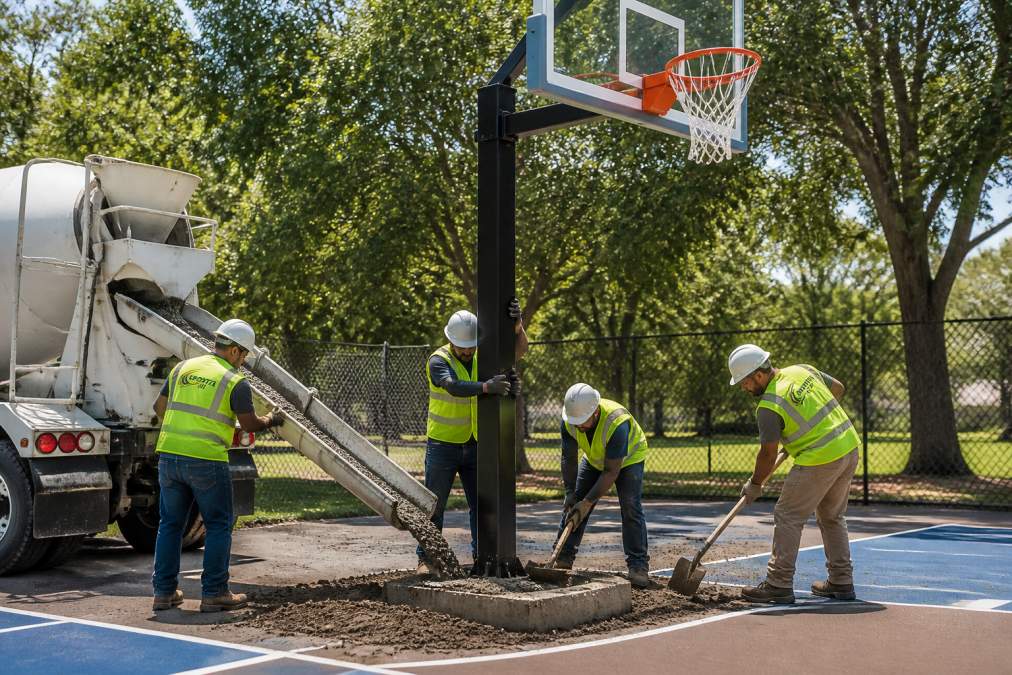
- Confirm the pad dimensions and playing-surface orientation before ordering.
- Excavate and pour the footing per the manufacturer's anchor specification.
- Allow the concrete to cure fully before mounting the post.
- Set the post plumb, then attach the backboard, rim, and padding.
- Add court markings using a Basketball Court Stencil Kit for lane, free throw line, free throw circle, and 3-point line.
- Inspect rim height and hardware torque before opening the court.
Schools and parks departments should also plan lighting at the same stage. The Dominator 100W LED Solar Court Light with Pole needs no trenching or AC connection, which removes the single biggest cost driver in court lighting projects. For facilities that want a freestanding option, the First Team Solar Powered Court Light delivers 14,800 lumens from a post mounted approximately 16 feet above the playing surface and carries a 5-year limited warranty.

Choosing Durable Outdoor Sports Equipment for Parks
Durable outdoor sports equipment for parks shares a short list of traits: corrosion-resistant metals, UV-stable finishes, replaceable wear components, and hardware that does not require a specialist to service.
Procurement, Grants, and the Bid and Quote Process
Public agencies usually cannot simply buy a basketball goal off a website. The procurement process for parks and recreation equipment typically requires a documented bid and quote process, and the threshold at which formal bidding kicks in varies by jurisdiction. That is the generic version every guide gives you. What most national articles skip is how this actually plays out for a southern Illinois park district or city recreation department.
Dominator 100W LED Solar Court Light →
A Carbondale-Area Procurement Path
For a city or park district in the Carbondale region, the practical sequence looks like this:
- Define the scope: equipment list, quantities, and who is responsible for installation.
- Confirm your purchasing threshold with the finance department before soliciting quotes, since the dollar level that triggers formal bidding differs between municipalities and park districts.
- Request written quotes with itemized pricing and lead times.
- Verify that quoted products meet current safety standards and accessibility guidelines.
- Document grant funding sources, since many community health and youth initiatives require reporting on how funds were spent.
- Award, then confirm delivery windows in writing before scheduling installation crews.
Funding Sources Worth Knowing
Grant funding is often the difference between a plan and a project. Programs aimed at youth development, physical activity barriers, and park infrastructure regularly fund equipment purchases. Applications are stronger when the equipment list is specific and the maintenance plan is written down, because reviewers want to see that the asset will still be in service years after the grant closes.
Writing a Spec That Gets Usable Bids
A vague spec produces vague bids, and vague bids are impossible to compare. Include post wall thickness, backboard size and material, anchor type, and whether installation is in scope. If you are buying an in-ground system, state the footing requirement and who pours it. If you are buying portable, state whether the base needs to be fillable and how it will be moved and stored.
Maintenance Schedules for Illinois Climates
The single highest-value habit is a written inspection log. It turns a maintenance request into a budget line, and it protects the department when a piece of equipment reaches end of life.
Conclusion
The hardest part of building a better park is not choosing equipment. It is proving the investment is worth it, then keeping that equipment in service year after year. Sports Vista USA supplies the court systems, solar lighting, net systems, and court accessories that parks, schools, and recreation departments in the Carbondale area rely on to keep facilities playable. Browse the full range of basketball goals, multi-sport net systems, and solar court lighting, then check out with confidence and get your court ready for the next season.
Frequently Asked Questions
What types of specialized sports equipment are best for public parks?
The best choices depend on space and audience. Multi-sport net systems like the Voyager adjust from pickleball height up to men's volleyball height, letting one court serve several programs. Commercial-grade in-ground basketball hoops handle high-traffic play better than residential models. Solar court lights extend usable hours without trenching for electrical lines. Parks that serve many age groups often combine a court system and lighting rather than buying a single piece of equipment.
What is the difference between residential and commercial-grade sports equipment?
Residential equipment is built for a household and lighter use. Commercial-grade equipment, such as institutional basketball goals and heavy-duty net systems, uses thicker posts, stronger anchoring, and weather-resistant finishes meant to survive daily public use. For parks, schools, and recreation departments, commercial-grade gear typically lasts longer and needs fewer replacements. Sports Vista USA carries options for both residential driveways and commercial facilities, so buyers can match the equipment to the actual traffic it will see.
How can parks improve accessibility through specialized athletic gear?
Accessibility starts with ADA-compliant routes to and around the equipment, then extends to the gear itself. Adjustable basketball systems let younger or shorter players reach the rim. Multi-sport net systems with crank adjustment can be raised or lowered by one person, which helps staff and players with limited strength. Planning paths, surfaces, and equipment together helps keep the whole fitness zone usable for more people.
How do recreation departments select durable basketball equipment for high-traffic areas?
Departments usually look at post gauge, anchoring method, backboard material, and warranty terms before price. In-ground hoops with concrete footings hold up better than portable units in busy parks. Weather-resistant finishes matter in Illinois, where freeze-thaw cycles stress metal and concrete. Buyers should also confirm the equipment meets safety standards and fits the bid and quote process. Sports Vista USA carries institutional basketball goals and court accessories for schools, churches, and parks.
This article is for general informational purposes only and does not constitute legal, engineering, or accessibility compliance advice. Parks and recreation departments should consult their own legal counsel and licensed contractors regarding ADA requirements, procurement rules, and installation specifications.


Leave a comment
This site is protected by hCaptcha and the hCaptcha Privacy Policy and Terms of Service apply.