

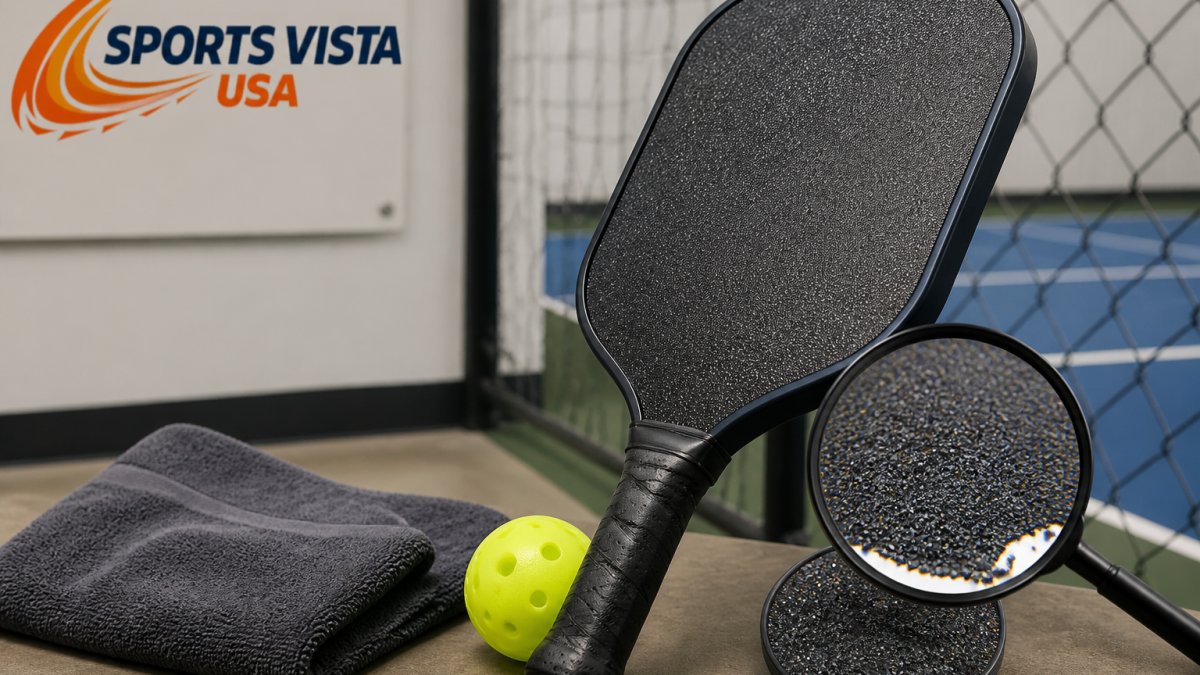
Table of Contents
- What Paddle Grit Is and How Surface Texture Affects Ball Contact
- Pickleball Paddle Surface Texture and Spin
- Raw Carbon Fiber vs Spray-On Grit Pickleball Paddle
- How Long Do Pickleball Paddles Last
- Assessing Paddle-Face Wear and Roughness
- Pickleball Paddle Grit Maintenance and Care
- Choosing a Durable Paddle for Your Play Style
- Conclusion
- Frequently Asked Questions
Last Updated: October 18, 2026
What Paddle Grit Is and How Surface Texture Affects Ball Contact
Paddle grit is the textured surface on a pickleball paddle's face that grips the ball, and understanding durable pickleball paddle grit explained helps you choose equipment that lasts. Like sandpaper, the rougher the surface, the more friction it creates on contact.
Grit comes as an applied coating or as naturally rough raw carbon fiber. The texture changes how the ball behaves when it leaves your paddle.
A textured face grips the ball and creates spin; a smooth face lets the ball slide off. Spin players need texture, while power players can do fine with raw carbon fiber.
Grit wears down with hours of use, and as the surface smooths you lose spin potential, which is why durable pickleball paddle grit explained is essential to understanding paddle longevity.
Pickleball Paddle Surface Texture and Spin
Surface texture controls spin generation. A rough face bites the ball harder, creating more rotation that dips the ball faster over the net and bounces it lower.
Different textures produce different spin levels:
| Surface Type | Spin Potential | Feel | Best For |
|---|---|---|---|
| Durable spray-on grit | High | Textured, bumpy | Spin-focused players |
| Raw carbon fiber | Medium-high | Slightly rough | All-around players |
| Worn paddle | Low | Smooth, slick | Beginners only |
Raw carbon fiber's weave creates natural texture without a coating, but it flattens over time and spin drops. A durable grit coating stays rough longer, keeping spin consistent.
Fresh grit grabs the ball aggressively; worn grit lets it slip. The difference shows up most in dinking, where spin matters most.
Raw Carbon Fiber vs Spray-On Grit Pickleball Paddle
Raw carbon fiber is the base material itself, with woven fibers creating natural texture. It's durable but wears smooth over thousands of hours, and you can't re-texture it once it does.
Spray-on grit is a thicker, rougher coating applied on top. It grips harder at first and wears faster than raw carbon, though some durable formulas hold texture much longer than others.
Which lasts longer depends on the formula.
The real difference is feel: raw carbon is smooth but responsive, durable grit rough and aggressive. Pick based on play style, not just durability claims.
Many paddles combine both. They use carbon fiber as the base and add spray-on grit on top. This gives you the responsiveness of carbon with the spin grip of grit. The Niupipo SWORD&SHIELD J2K+ uses aramid fiber and carbon fiber with a textured surface designed for this balance.

How Long Do Pickleball Paddles Last
Paddle lifespan depends on playing hours: a casual player may use one for a year or more, while a competitive player grinding daily may need a new paddle every few months.
Each hour of use flattens the grit slightly; after enough hours, the texture is gone.
Consider your play pattern.
Actual wear depends on court surface, ball type, and stroke intensity: outdoor courts and harder shots wear grit faster than indoor play and soft dinking.
A durable grit paddle extends this timeline. That's the real advantage, consistency over time, not infinite durability.
Assessing Paddle-Face Wear and Roughness
The finger test is a useful first signal but is subjective and easily fooled by surface oils, dust, or a fresh cleaning. A better approach combines a simple at-home inspection routine with honest limits on what it can conclude.
A repeatable at-home inspection routine
- Clean and dry the face first. Wipe with a damp microfiber cloth and air-dry completely; hand oils and ball residue can mask texture.
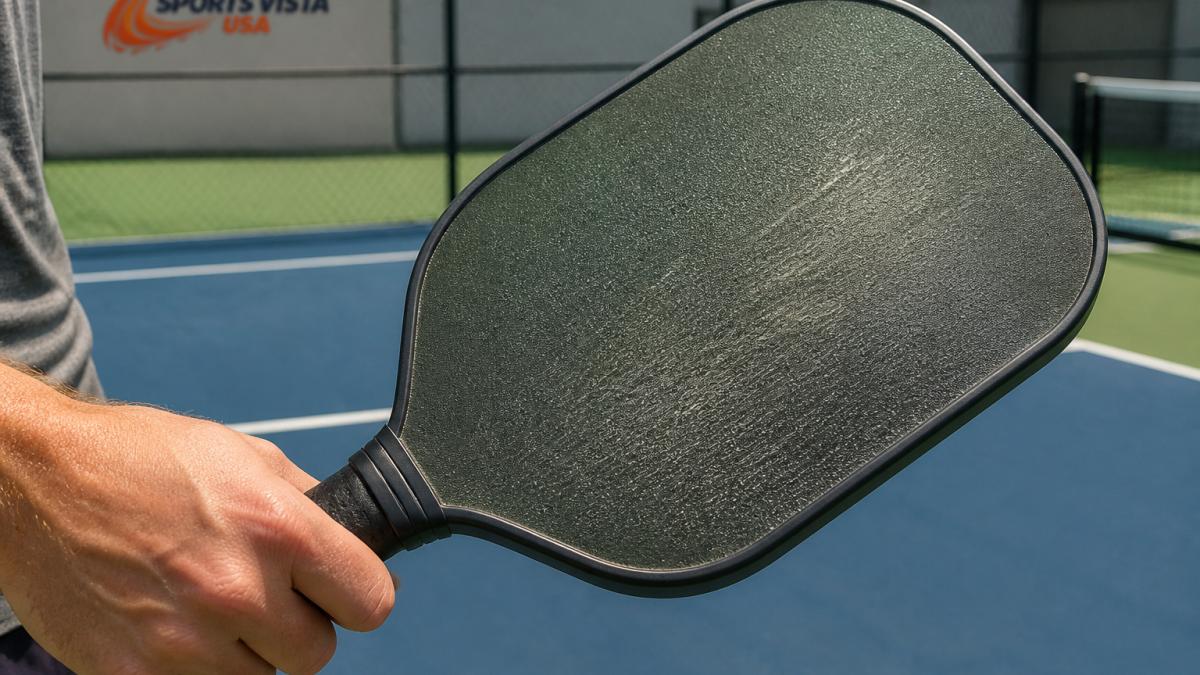
- Use raking light, not direct light. Hold the paddle at a low angle under a bright lamp or window: fresh texture casts small shadows and looks matte, while a worn face looks flatter and more reflective.
- Compare against a reference. Keep a photo of the face from day one under the same lighting; side-by-side comparison beats memory.
- Do a controlled drag test. Drag a clean cotton swab or soft microfiber edge across the face in one direction: fresh grit gives faint, consistent resistance and an audible rasp, while a slick face glides. Use the same spot each time.
- Log playing hours, not calendar time. Note date, hours played, indoor or outdoor, and conditions; wear tracks hours and conditions, not months.
What each test can and cannot tell you
| Test | What it reliably shows | What it cannot show |
|---|---|---|
| Visual raking light | Gross flattening, shiny wear patches, edge wear | Small changes in friction |
| Cotton-swab drag | Relative change versus your own baseline | Absolute spin performance |
| Finger touch | Obvious smoothness | Subtle wear; easily skewed by oils |
| On-court spin observation | Real-world behavior change | Whether the cause is grit, ball, or technique |
The touch test is least reliable because skin oils, sweat, and temperature change how the surface feels. Treat it as a prompt to look closer, not a verdict.
Niupipo SWORD&SHIELD J2K+ 16mm Aramid Fiber Pickleball Paddle →
Reading the wear pattern
Wear is rarely uniform. Check these zones:
- Center sweet spot: Usually the first to flatten. A smooth oval in the middle with rough edges is a classic sign of heavy play.
- Edges and throat: Often show scuffing from setting the paddle down or scraping low balls.
- Off-center patches: Can indicate a grip or swing path that repeatedly contacts the ball in one area.
If the center is noticeably smoother than the perimeter under raking light, your grit has worn meaningfully even if the paddle still "feels" textured to your hand.
When observation is not enough
At-home tests can't measure roughness in absolute terms.
Pickleball Paddle Grit Maintenance and Care
You can't restore worn grit, but you can avoid accelerating its loss. Care is about preventing what flattens, clogs, or chemically degrades texture before its time.
What actually damages grit
- Abrasion: Setting the paddle face-down on concrete, asphalt, or gritty surfaces grinds texture flat; brief contact adds up over hundreds of repetitions.
- Contamination: Ball residue, hand oils, sunscreen, and dust pack into the texture and reduce ball contact. Gentle cleaning reverses this.
- Heat: Hot cars and direct sun can affect the face material and any coating. Store indoors.
- Harsh chemicals and solvents: Alcohol-heavy cleaners, acetone, and abrasive polishes can degrade coatings and alter texture. Avoid them.
- Abrasive tools: Brushes, scrub pads, and sandpaper remove grit permanently. Never use them.
A safe cleaning routine
- Wipe the face with a damp microfiber cloth after each session to remove ball residue and hand oils.
- For stubborn buildup, use mild soap on a damp cloth, then wipe clean with a damp cloth.
- Dry with a soft towel and air-dry before storing.
- Never submerge the paddle or run it under a strong stream of water; moisture can affect the core and edge materials.
If unsure whether a cleaner is safe, use plain water and a microfiber cloth, and check the manufacturer's care instructions rather than experimenting.
Storage and handling habits that preserve texture
- Store the paddle in a case or cover, face protected from scuffing gear.
- Keep it out of hot cars, trunks, and direct sunlight.
- Set it on a towel or in its cover, never face-down on the court.
- Avoid dragging the edge when picking up low balls; edge scuffs spread into the face.
- Rotate between two paddles if you play frequently so each accumulates fewer hours.
Outdoor play and local conditions
Players in and around Carbondale, Illinois, deal with humid summers, freeze-thaw winters, and outdoor courts that hold dust and grit. Dusty or windy outdoor play deposits abrasive particles on the face, and gritty surfaces raise the chance of abrasion on ground contact. Wipe the face more often outdoors and store the paddle indoors between sessions. Indoor play exposes the face to less grit, though hand oils and ball residue still accumulate.
What care cannot do
Maintenance slows wear; it doesn't reverse it. No cleaning method restores flattened texture, and products claiming to "re-texture" a face should be treated with caution, they may alter the surface in ways that affect performance and compliance. If spin has clearly dropped and the center is smooth under raking light, it's time to consider a replacement.
Choosing a Durable Paddle for Your Play Style
Different players need different paddles: durability matters, but so does feel and performance.
For spin-focused players: You need durable grit that holds texture. The Osaka Pro Tour combines T700 carbon with a textured carbon friction face built for spin generation and control.

For power players: Raw carbon fiber works well. It's lighter and more responsive, and it wears faster, less important if you don't rely on grit.
For all-court players: You need balance. A paddle with both carbon fiber and durable grit works best.
For beginners: Start with a mid-range paddle. You don't need the most durable option yet. The Warping Point Phoenix is designed for players learning control and placement.
Consider how much you play: casual players can buy a good paddle and replace it when needed, while competitive players should invest in durable grit for longer texture retention.
Conclusion
Paddle grit is the texture on your paddle face that creates spin and controls ball contact. Durable grit holds this texture longer than raw carbon fiber alone. Understanding wear patterns helps you choose the right paddle and know when to replace it.
The best paddle for you depends on your play style and how much you play. At Sports Vista USA, we carry paddles built for different player types and durability levels. Whether you need maximum spin retention or balanced all-court performance, we have options that match your needs. Browse our pickleball paddle selection to find the right fit for your game.
Frequently Asked Questions
What is durable grit in pickleball?
Durable grit refers to textured surface coatings applied to pickleball paddle faces that resist wearing down during play. These textures, whether raw carbon fiber weaves or spray-on finishes, create friction between the ball and paddle face to generate spin and control. Durable grit maintains its roughness longer under repeated use, preserving spin potential and ball bite across hundreds of playing hours.
How does pickleball paddle surface texture affect spin?
Surface texture creates friction that grips the ball during contact, allowing players to apply topspin, backspin, and slice shots. A rougher paddle face increases friction and ball bite, producing more spin potential. As grit wears smooth over time, friction decreases, reducing spin performance. Players who prioritize spin-heavy shots benefit from paddles with durable textures that maintain roughness through extended play.
Does carbon fiber paddle grit wear down over time?
Yes. Both raw carbon fiber weaves and applied spray-on grit textures wear down with use. Raw carbon fiber typically maintains its texture longer than spray-on coatings because the roughness is integral to the weave structure. Spray-on grit can smooth faster, especially with outdoor play or aggressive court conditions. Wear rate depends on playing frequency, playing surface, cleaning habits, and storage conditions.
How can you tell when a pickleball paddle has lost its grit?
Run your finger across the paddle face, a worn paddle feels noticeably smoother than a new one. You may also notice reduced spin on your shots and less ball bite during contact. Visual inspection under direct light reveals a glossier, less textured appearance on worn paddles. If the paddle feels slick or your spin performance drops significantly, it's time to consider replacement.
Ready to upgrade your paddle game? Check out the Niupipo SWORD&SHIELD J2K+ Aramid Fiber Pickleball Paddle for durable spin performance, or explore our full pickleball paddle collection to find your next match-ready paddle.


Leave a comment
This site is protected by hCaptcha and the hCaptcha Privacy Policy and Terms of Service apply.