


Last Updated: October 27, 2026
Quick Summary
Protect a volleyball court surface by matching the material to indoor or outdoor play, inspecting it monthly for dents, cracks, and traction loss, and cleaning on a weekly to seasonal schedule. Control water and UV damage, and repair hazards like lifted tiles or soft spots at the first warning sign.
- Walk the full court monthly and log dents, soft spots, raised edges, and worn paint.
- Clear drainage channels before winter and after every major storm to prevent freeze-thaw damage.
- Repair loose tiles, multi-zone cracks, standing water, and soft spots immediately rather than monitoring them.
- Clean drainage channels, tighten net anchors, and apply manufacturer-approved sealer before the first freeze.
- Patch hairline cracks in one zone but resurface when cracking spans multiple zones.
Table of Contents
- Why Volleyball Court Surface Protection Pays Off
- Matching Surface Material to Indoor and Outdoor Play
- Your Volleyball Court Inspection Checklist
- Building a Volleyball Court Floor Maintenance Schedule
- Indoor Volleyball Court Floor Protection That Works
- Outdoor Volleyball Court Surface Maintenance for Illinois Weather
- Repair or Resurface? Reading the Warning Signs
- Shop Court Equipment Built to Protect Your Surface
- Frequently Asked Questions
Why Volleyball Court Surface Protection Pays Off
A volleyball court surface is the playing layer underfoot.
The surface is where every plant, cut, and landing meets the ground.
Below, we break down how to protect a volleyball court surface indoors and outdoors, what to inspect, and when to repair rather than resurface. First, though, here is the short version.
| Goal | What It Protects | When to Act |
|---|---|---|
| Match material to setting | Traction, cushioning | Before installation |
| Inspect monthly | Player safety | Year-round |
| Clean on schedule | Surface lifespan | Weekly to seasonal |
| Control water and UV | Durability | Seasonal |
| Repair early | Cost avoidance | At first warning sign |
Matching Surface Material to Indoor and Outdoor Play
Indoor courts and outdoor courts face different conditions, and the material you choose should reflect that.
For facilities comparing options they can actually buy, our outdoor sport court flooring covers durable, drainage-friendly modular tiles built for basketball, pickleball, and multi-sport use.
Your Volleyball Court Inspection Checklist
A volleyball court inspection checklist is a short, repeatable walk-through.
- Walk the full court surface and feel for dents, soft spots, or raised edges
- Check traction at the attack lines and landing zones
- Look for cracking, scratches, and worn paint
- Inspect net poles, anchoring, and court stability
- Confirm drainage paths are clear of debris
- Check protective coverings and floor mats for slip or wear
Log what you find.
Building a Volleyball Court Floor Maintenance Schedule
A volleyball court floor maintenance schedule is a written plan that assigns cleaning, inspection, and protection tasks to specific intervals, and, critically, tailors the procedure to the surface material.
A Seasonal Inspection and Maintenance Calendar
Use this repeatable calendar as the backbone of your plan. Adjust the timing to your facility's usage, but keep the sequence.
| Season | Inspection Focus | Cleaning and Protection Tasks | Repair Triggers |
|---|---|---|---|
| Spring (post-winter) | Freeze-thaw damage, heaving, cracked slabs, loose tiles | Clear drainage channels, remove debris, deep-clean outdoor surfaces | Any crack wider than a hairline, lifted tile, or soft spot underfoot |
| Summer (peak use) | UV fading, traction loss at attack lines, worn paint | Sweep weekly, spot-clean spills, reapply line paint as needed | Glossy or slick zones, faded boundary lines |
| Fall (pre-winter) | Drainage paths, sealant integrity, anchor tightness | Clean gutters and channels, tighten net hardware, apply manufacturer-approved sealer | Standing water after rain, loose anchors |
| Winter (indoor focus) | Moisture intrusion under mats, coating lift | Wipe spills immediately, lift and dry mats periodically | Bubbling or peeling coating, musty odor |
Surface-Specific Protection Procedures
Care differs by material.
- Indoor wood or synthetic flooring: Control humidity to prevent expansion and contraction; wipe spills immediately because moisture under a mat can lift a finish. Use entry mats to capture grit before it reaches the playing layer.
Damage Diagnosis and Repair Thresholds
Distinguish cosmetic wear from hazards before you schedule work.
- Cosmetic (monitor): Hairline cracks in one zone, scuffs from equipment, faded lines in otherwise sound areas.
- Hazard (repair now): Loose or lifted tiles, cracks across multiple zones, standing water that does not drain within hours, soft spots indicating sub-base movement, or any loss of traction at landing zones.
For a deeper safety walkthrough, see how to make temporary volleyball courts safer.
Indoor Volleyball Court Floor Protection That Works
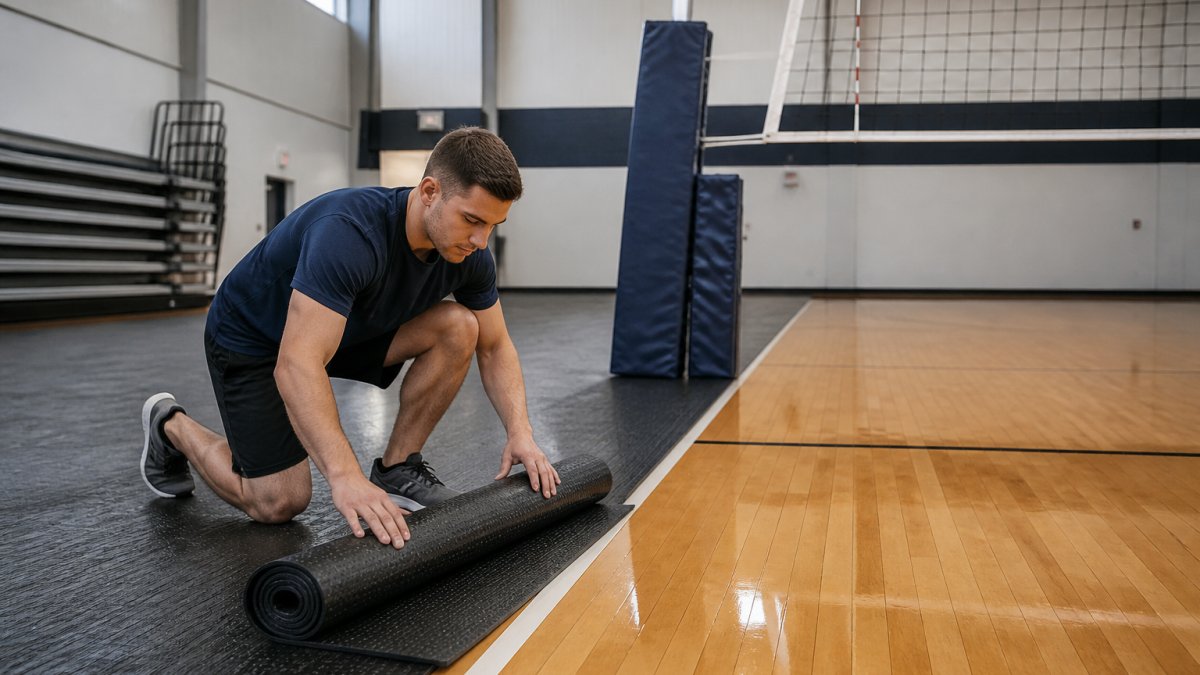
Padding on net posts and standards protects players, not the floor, but both belong in an indoor protection plan. In practice, the facilities that last are the ones that treat the floor as equipment.
Outdoor Volleyball Court Surface Maintenance for Illinois Weather
Outdoor volleyball court surface maintenance in Carbondale means planning for freeze-thaw cycles, summer UV, and heavy spring rain. Illinois weather is hard on outdoor courts, and moisture is the quiet destroyer. The mechanism is simple: water finds cracks, freezes, expands, and widens them. Repeat that cycle through a southern Illinois winter and a hairline crack becomes a trip hazard by spring.
Freeze-Thaw and Drainage: The Underlying Causes of Premature Failure
Most outdoor surface failures start below the playing layer. Poor drainage, water intrusion, and movement in the sub-base cause heaving, cracking, and loose tiles, and a new surface installed over a failing base will fail the same way. Before winter and after every major storm, walk the perimeter and confirm drainage channels, swales, and outlets are clear of leaves and debris. Standing water that lingers for hours after rain is a signal the sub-base is not shedding water properly.
Seasonal Timing for Carbondale Facilities
- Early spring: Inspect for freeze-thaw damage, heaving, cracked slabs, lifted tiles, and soft spots. Clear drainage paths before spring rains.
- Summer: UV exposure breaks down coatings and fades lines. Reapply line paint as needed and check traction at attack lines and landing zones, which wear fastest.
- Late fall: Clean drainage channels, tighten net anchors, and apply manufacturer-approved sealer before the first freeze. Skipping a post-storm inspection is how small cracks become trip hazards by the next season.
Material-Specific Outdoor Protection
For high-traffic outdoor facilities around Carbondale, a durable semi-permanent system makes maintenance simpler. The Gared outdoor volleyball system uses 3-1/2-inch semi-permanent standards built for schools, parks, and heavy recreation use. Pair it with drainage-friendly outdoor sport court flooring so water sheds rather than pooling at the posts.
Repair or Resurface? Reading the Warning Signs
Patch it if you see:
- Hairline cracks in one zone
- Scratches or dents from equipment
- Faded lines in otherwise sound areas
Resurface or replace when you find:
- Cracking across multiple zones
- Widespread loss of traction
- Soft spots or sub-base movement
- Repeated repairs in the same spot
Shop Court Equipment Built to Protect Your Surface
Our volleyball systems and court equipment covers nets, posts, padding, and accessories for pools, backyards, schools, churches, and parks. If you are weighing whether surface protection is worth the investment, our guide to the cost factors in professional volleyball court flooring explains what drives the numbers.
Frequently Asked Questions
How do you protect a volleyball court surface?
Start with the basics: keep grit off the floor, keep water away from seams and edges, and keep equipment from dragging. Use walk-off mats at entrances, wipe up spills immediately, and lift rather than slide net posts and standards. Add protective coverings when the court hosts non-volleyball events. Pair those habits with a written inspection routine so small issues, like a lifted seam or a loose anchor, get fixed before they spread across the surface.
How often should a volleyball court be inspected?
Walk the court before every match or practice for a quick visual check of seams, edges, and anchors. Schedule a deeper inspection monthly for high-traffic facilities and quarterly for lighter use. Outdoor courts need extra checks after storms, freezes, and heavy rain. Record what you find each time so you can spot patterns, such as recurring cracks near a post or wear in one traffic lane, and address the cause rather than just the symptom.
What causes volleyball court surfaces to wear out?
Most wear comes from four sources: abrasive grit tracked onto the floor, UV and moisture exposure on outdoor courts, heavy equipment dragged instead of lifted, and water trapped under the surface. Indoor acrylic and polyurethane floors wear faster when cleaning leaves residue that holds dirt. Outdoor surfaces break down when drainage fails and water sits against the sub-base. Fixing those causes early usually costs far less than resurfacing a full court.
How do you maintain an outdoor volleyball court surface?
Keep the court clear of leaves and debris, check drainage after every heavy rain, and rinse away sand or grit before it works into seams. Inspect the surface for cracks, fading, and soft spots each season, and touch up small flaws before freeze-thaw cycles widen them. Store nets and posts properly during the off-season, and keep equipment off the surface when it is not in use. A short seasonal calendar beats one big repair project later.
When should a volleyball court surface be repaired or resurfaced?
Repair small, isolated issues quickly: a single crack, a lifted seam, or a worn spot near a post. Consider resurfacing when damage is widespread, when traction has faded across the whole playing area, or when repeated patches keep failing in the same zone. If water is pooling or the sub-base feels soft underfoot, address drainage first, because a new surface laid over a failing base will break down again.
How can equipment placement affect volleyball court floor longevity?
Net posts, standards, and padding all concentrate load and contact in small areas. Anchors that loosen or sit unevenly can crack the surface around them, and dragging posts across the floor scratches acrylic and polyurethane finishes. Set posts in the correct sleeves, pad the standards, and lift equipment rather than sliding it. Check anchor tightness during every inspection so movement does not enlarge the hole or stress the surrounding surface.
Protecting a volleyball court surface is a habit, not a purchase. If your facility in Carbondale or anywhere in the region needs nets, posts, padding, and court accessories that hold up to real play, Sports Vista USA can help. Browse our volleyball systems, compare options for your space, and get the right equipment for your court. Get started with Sports Vista USA and keep your court ready for every season.


Leave a comment
This site is protected by hCaptcha and the hCaptcha Privacy Policy and Terms of Service apply.