

Table of Contents
- Why Outdoor Sand Volleyball Courts Matter for Player Development
- Physical Conditioning and Cardiovascular Fitness on Sand
- Strength Development from Running and Jumping in Sand
- Sand Volleyball Workout Benefits: Coordination, Balance, and Flexibility
- Ball Control and All-Around Volleyball Skills on Sand
- Sand Volleyball vs Indoor Volleyball: Key Differences and Skill Transfer
- Choosing the Right Outdoor Volleyball Court Surface and Net System
- Community and Accessibility Benefits of Sand Courts
- Frequently Asked Questions
Last Updated: October 9, 2026
Why Outdoor Sand Volleyball Courts Matter for Player Development
Playing volleyball on sand transforms how athletes train and compete. The unstable surface demands constant micro-adjustments from your body, forcing muscles to work harder with every step, jump, and dive. This isn't just a different playing environment, it's a fundamentally different athletic challenge that builds skills indoor courts can't replicate.
Sports Vista USA helps schools, parks, recreation departments, and community organizations understand why sand courts deserve a place in their athletic facilities. Whether you're building a new court in Carbondale or upgrading an existing setup, the benefits extend far beyond the summer season. Sand volleyball develops athletes more completely than indoor play alone, improves overall conditioning, and creates a community gathering space that drives participation year-round.
The following sections break down the specific physical, skill-based, and community benefits that make outdoor sand volleyball courts a smart investment for any organization serious about player development.
Physical Conditioning and Cardiovascular Fitness on Sand
Sand fundamentally changes how your cardiovascular system responds to volleyball. Every movement requires more effort. Running through sand demands greater energy expenditure than running on a hard court, which means your heart works harder and your aerobic capacity improves faster.
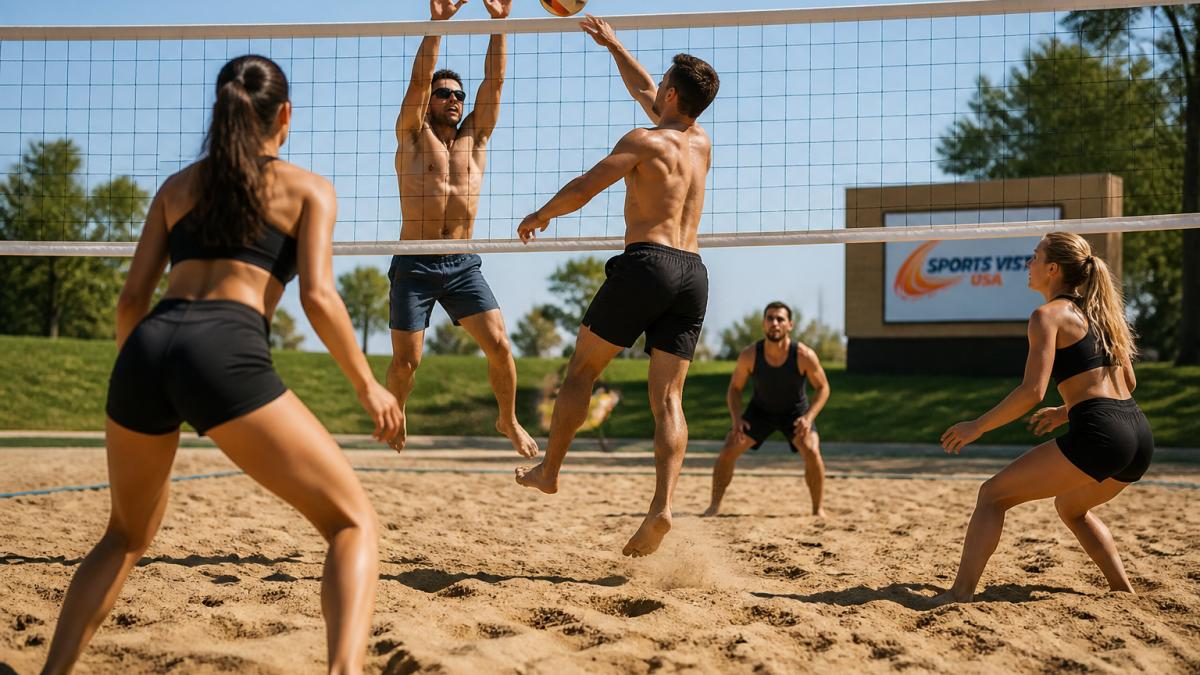
The resistance of sand means shorter sprints feel like longer ones. A 10-foot dash on sand taxes your system more than a 15-foot dash on hardwood. This built-in resistance training effect means players build cardiovascular endurance more efficiently. Teams that practice on sand regularly may experience improved stamina when they transition back to indoor courts, where movement feels noticeably easier.
Sand also forces constant engagement of stabilizer muscles. Your feet and ankles are never locked into a stable position, they're constantly sinking and shifting. This instability keeps your entire lower body activated throughout every drill and game, elevating heart rate and building aerobic capacity in ways flat surfaces cannot match.
For Carbondale recreation programs and schools, sand courts offer year-round conditioning benefits. Even during cooler months, the outdoor environment and sand resistance provide training stimulus that indoor facilities struggle to replicate without specialized equipment.
Strength Development from Running and Jumping in Sand
Sand is a natural resistance tool. When you push off to jump, the sand compresses and resists your movement, forcing your leg muscles to generate more force. This translates directly to explosive power development that carries over to all volleyball movements.
The quadriceps, hamstrings, glutes, and calf muscles all work harder on sand. Jump height may appear lower on sand initially, but the muscular effort required to achieve that height is significantly greater. Athletes who train regularly on sand may develop stronger legs, which can improve their performance on any surface.
Running patterns change on sand too. Your stride shortens naturally, and your body recruits more muscle fibers to maintain speed. This builds strength in the hip flexors, stabilizer muscles, and core, areas that indoor volleyball develops less intensively. The result is more balanced leg strength and improved injury resistance.
Sand training also strengthens ankle stabilizers. The constant micro-adjustments your ankles make while moving through sand build proprioception and muscular support around the joint. Sand work may help strengthen ankle stabilizers.
For facilities in Carbondale serving youth volleyball programs, sand courts provide a natural strength-building environment without requiring specialized gym equipment. Players get stronger simply by playing the sport they love.
Sand Volleyball Workout Benefits: Coordination, Balance, and Flexibility
Coordination improves dramatically on sand because the surface demands constant adjustment. Your nervous system must continuously recalibrate your position, weight distribution, and movement timing. This heightened demand for neuromuscular coordination carries over to all athletic activities.
Balance development happens automatically. The unstable surface forces your core and stabilizer muscles to engage continuously. Players develop better body awareness and control, which reduces falls and improves movement precision. Better balance means cleaner footwork, more consistent passes, and more confident defensive positioning.
Flexibility gains come from the way sand absorbs impact. The softer landing surface allows deeper ranges of motion during lunges, dives, and lateral movements without the joint stress of hard courts. Players naturally move through greater ranges of motion on sand, and over time, this translates to improved flexibility.
The repetitive nature of volleyball movements on sand also builds functional flexibility, the kind that matters during actual play. Rather than static stretching, sand volleyball creates dynamic flexibility improvements that athletes can immediately apply to their game.
Ball Control and All-Around Volleyball Skills on Sand
Ball control becomes more challenging on sand, which is exactly why it's so valuable for skill development. The unstable platform makes it harder to position yourself perfectly for each touch. This forces players to develop better hand-eye coordination and touch sensitivity because they can't rely on a stable base.
Passing improves because you must focus more intently on the ball. Your platform is less stable, so compensation is impossible, you must execute the fundamental movement correctly. Players who develop passing skills on sand may transfer those skills to indoor courts.
Setting requires more precision on sand. The moving surface means you can't just position your hands and expect the ball to go where you want. You must develop better feel for the ball and more consistent technique. Setters who train regularly on sand may develop exceptional touch that translates to all playing surfaces.
Hitting develops differently too. The unstable takeoff means you can't rely on a perfectly planted approach. You must develop explosive power and body control to generate consistent attack angles. Hitters trained on sand may develop more adaptable attacking skills because they've learned to hit effectively from imperfect platforms.
Defensive skills improve because the surface demands constant repositioning. You can't shuffle into position and stay there, you're moving continuously to maintain balance. This builds better court awareness and faster reaction times.
Sand Volleyball vs Indoor Volleyball: Key Differences and Skill Transfer
The differences between sand volleyball and indoor volleyball are significant, but skills transfer both directions. Understanding these differences helps you use sand training strategically.
| Aspect | Sand Volleyball | Indoor Volleyball |
|---|---|---|
| Court Surface | Unstable, absorbs impact | Firm, consistent positioning |
| Movement Demands | Higher resistance, more effort | Lower resistance, faster movements |
| Skill Focus | Power, technique precision, touch | Speed, coordination, positioning |
| Physical Demand | Strength and power emphasis | Agility and speed emphasis |
| Ball Control | Requires exceptional technique | More forgiving of positioning errors |
| Team Size | Typically 2-4 players per side | 6 players per side |
| Conditioning Effect | Builds strength and power rapidly | Maintains cardiovascular fitness |
Sand volleyball teaches athletes to be more self-reliant. With fewer players on the court, each person must cover more area and execute more skills independently. This builds versatility and problem-solving ability that strengthens indoor volleyball performance.
Gared Sideout Outdoor Volleyball System - 2-3/8in OD Semi-Permanent Standards →
Indoor volleyball teaches athletes speed and positioning efficiency. The faster pace and firm surface reward quick movement and precise positioning. Athletes who develop these skills on indoor courts bring valuable speed and decision-making to sand play.
The best volleyball programs use both surfaces. Sand training builds the foundational strength and technical precision that makes athletes more effective on indoor courts. Indoor training maintains the speed and positioning skills that sand work can't fully develop.
For Carbondale schools and recreation departments, having both sand and indoor facilities creates a complete development environment. Players who experience both surfaces become more complete athletes.
Choosing the Right Outdoor Volleyball Court Surface and Net System
Building an outdoor sand volleyball court requires attention to surface quality and net system durability. The right combination ensures years of reliable play and consistent performance.
Sand quality matters significantly. Competition-grade sand is uniform in size and composition, which provides better playing conditions than generic sand. The sand should compact slightly under foot but not become hard or slippery.
Net systems for sand courts must handle outdoor conditions. Weather-resistant construction is essential because nets face constant sun exposure, wind, and moisture. The net must maintain consistent tension through temperature changes and seasonal weather variations.
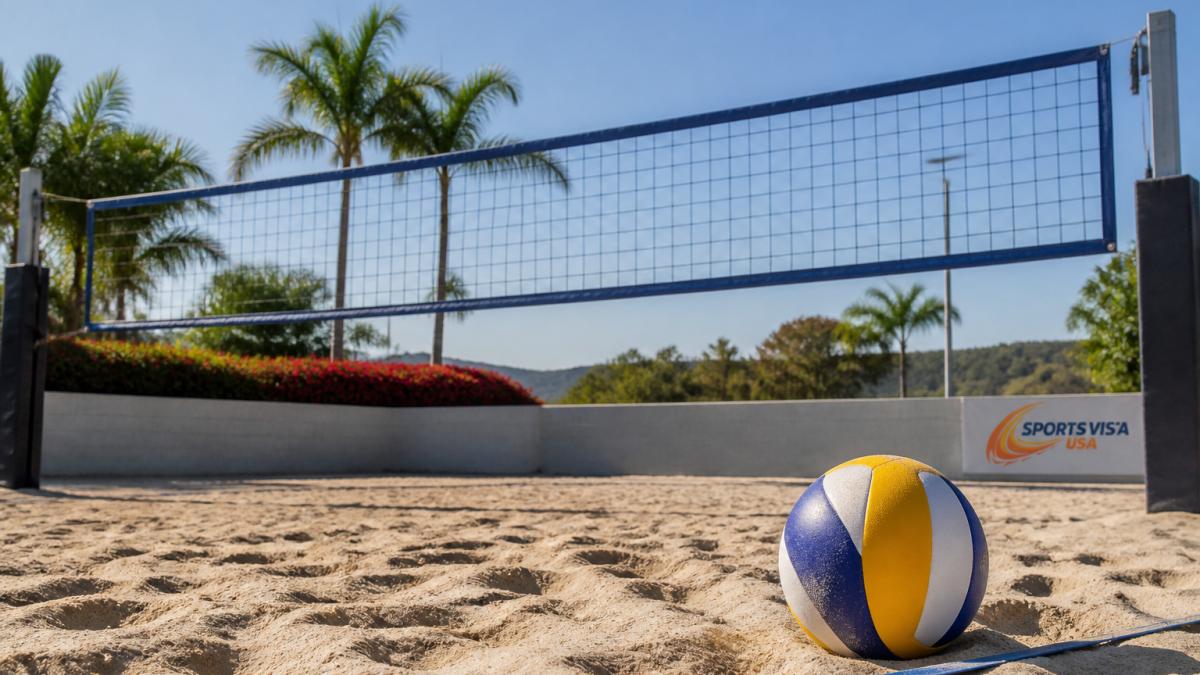
Sports Vista USA offers several sand volleyball court options designed for different facility types and budgets. The Gared Sideout Outdoor Volleyball System - 2-3/8in OD Semi-Permanent Standards provides durable semi-permanent installation for backyards, schools, and recreation centers.

For higher-traffic facilities like schools and parks, the Gared Outdoor Volleyball System - 3-1/2in offers enhanced durability. The larger diameter standards provide added strength and stability for frequent competitive play.
For portable setups, the Gared Mongoose Wireless Volleyball System delivers tool-free setup without cables or complicated tensioning hardware. The wireless design works on grass, sand, and hard courts, making it versatile for multi-sport facilities or temporary installations.
Replacement nets ensure your system stays playable season after season. The Gared Sideout Outdoor Volleyball Net - 28ft and 32ft options feature weather-resistant construction that maintains consistent tension through changing outdoor conditions.

The right system depends on your facility type, usage frequency, and installation flexibility needs. Sports Vista USA can help you match your facility requirements to the appropriate system.
Community and Accessibility Benefits of Sand Courts
Sand volleyball courts create gathering spaces that drive participation beyond what indoor facilities typically achieve. The outdoor setting, social atmosphere, and lower barrier to entry attract players who might not participate in traditional indoor leagues.
Community participation increases when facilities offer sand courts. Families attend games together. Spectators can sit comfortably and socialize while watching matches. The outdoor environment creates a festival-like atmosphere that indoor gyms simply cannot replicate.
Sand courts are more accessible to recreational players. Beginners feel less intimidated by the slower pace and more forgiving playing conditions.
Youth programs benefit from sand court availability. Young players develop confidence and fundamental skills more quickly on sand because the environment is less punishing.
For Carbondale parks and recreation departments, sand courts represent an investment in community health and social connection. They attract new players, retain existing participants, and create a gathering place that strengthens community bonds.
Accessibility extends to different ability levels. Sand volleyball accommodates players with varying mobility needs better than some indoor sports.
Outdoor sand volleyball courts transform athlete development while building community engagement. The physical conditioning, strength development, and skill-building benefits are unmatched by indoor play alone.
Whether you're outfitting a school, park, recreation center, or backyard facility, the right equipment makes the difference. Sports Vista USA specializes in outdoor volleyball systems designed for durability, performance, and reliable play season after season.
Frequently Asked Questions
Why do people play volleyball on sand?
Players choose sand because it demands greater effort from muscles, builds strength faster than hard courts, and reduces impact on joints. The unstable surface requires constant micro-adjustments, improving balance and coordination. Sand also makes the game more challenging and fun, forcing better ball control and footwork. Many athletes use sand play to develop skills that transfer directly to indoor volleyball.
Is sand volleyball a good workout?
Yes. Sand volleyball provides an intense full-body workout. Running and jumping on sand requires more energy than on hard surfaces, building leg strength, cardiovascular endurance, and core stability. The constant shifting and balance adjustments engage stabilizer muscles throughout your body. A single match delivers significant conditioning benefits, making it one of the most effective athletic activities available.
What is the best surface for a volleyball court?
Sand is ideal for outdoor courts because it absorbs impact, reducing joint stress while building strength. It provides natural drainage, requires minimal maintenance, and offers consistent playability in most weather. For outdoor volleyball, sand courts deliver superior conditioning benefits and skill development compared to hard surfaces. The choice between sand and other surfaces depends on your facility's location, budget, and intended use.
What equipment does an outdoor sand volleyball court need?
An outdoor sand volleyball court requires a sturdy net system, posts or standards, and quality sand. For semi-permanent installations at schools or parks, options like the Gared Sideout Outdoor Volleyball System with 3-1/2" OD standards provide professional-grade durability. For portable setups, the Mongoose Wireless Volleyball System offers tool-free installation on sand. Weather-resistant nets maintain consistent tension through changing conditions, and proper post spacing ensures safe, regulation play.


Leave a comment
This site is protected by hCaptcha and the hCaptcha Privacy Policy and Terms of Service apply.