

Table of Contents
- Residential Volleyball Court Installation Cost: What to Expect
- Backyard Volleyball Court Dimensions and Surface Options
- Site Preparation and Excavation Costs
- Volleyball Net System Installation: Equipment and Labor
- Durable Volleyball Court Equipment for Homes
- DIY vs. Professional Installation: Cost Comparison
- Total Cost of Ownership and Maintenance
- Conclusion
- Frequently Asked Questions
Last Updated: September 7, 2026
Residential Volleyball Court Installation Cost: What to Expect
The residential volleyball court installation cost is one of the most variable home improvement expenses you can plan for, driven almost entirely by your site conditions and surface choice. This guide from Sports Vista USA breaks down every cost layer so you can budget accurately for a backyard court in Carbondale, Illinois.
The net system is often the smallest line item; ground work, surface material, and drainage account for the bulk of the project. Before pricing equipment, get a clear picture of your yard's grading, soil compaction, and machinery access.
Backyard Volleyball Court Dimensions and Surface Options
A regulation doubles court measures 59 feet by 29.5 feet, but your backyard court dimensions should include a safety zone of at least 10 to 12 feet beyond the boundary lines, bringing the total recommended area to roughly 80 by 55 feet. Many Carbondale homeowners trim the safety margins or reduce to a singles court (52.5 by 26.2 feet) to fit their lot.
Your surface choice is the single biggest cost driver and determines how the court plays. Here is a breakdown of the most common options for Illinois backyards:
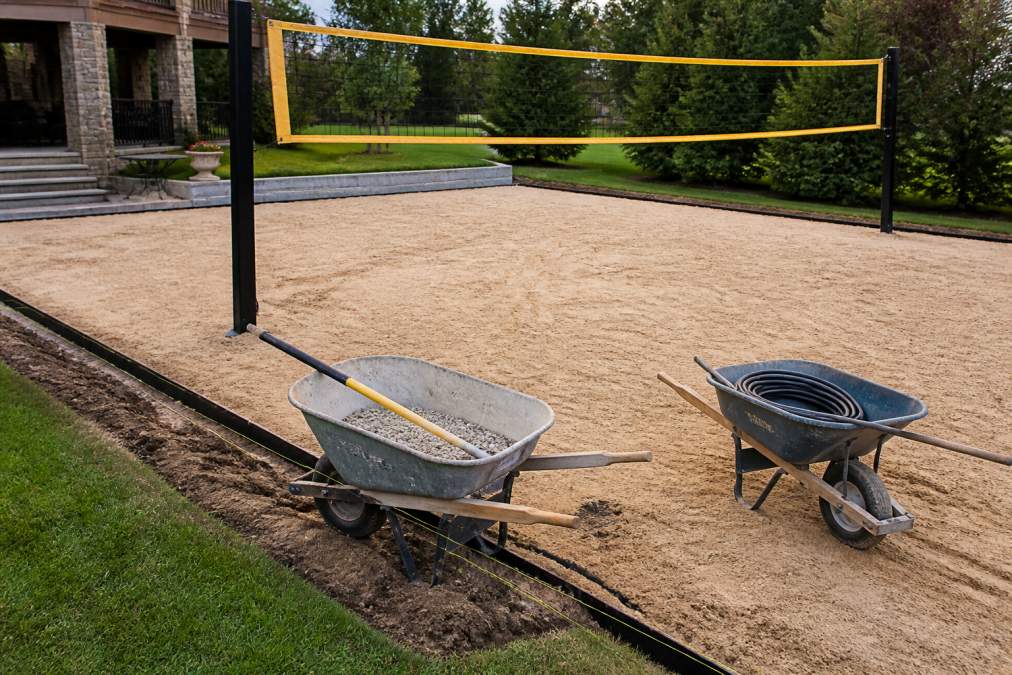
- Sand Courts: This is the most popular choice for dedicated volleyball players. A typical court needs 12 to 18 inches of sand depth. For a regulation-sized court with a safety margin (approximately 80 x 55 feet), that translates to roughly 160 to 240 cubic yards of sand, or 190 to 290 tons. You need washed, rounded silica sand, often called "beach sand" or "jointing sand," which compacts well underfoot and drains properly. Builder's sand contains angular particles that will compact into a hard, unsafe surface. The larger cost is often delivery and placement, which requires a conveyor truck or skid steer.
- Modular Sports Flooring (Interlocking Tiles): This is the premium, multi-sport option. These polypropylene tiles sit on a compacted aggregate base and are porous, allowing water to drain through. The cost per square foot is significantly higher than sand, but the court is immediately usable for volleyball, pickleball, basketball, and other activities. A critical consideration for Carbondale is the sub-base, which requires a perfectly flat, compacted 4 to 6 inches of crushed limestone or Class 5 aggregate. The freeze-thaw cycle can cause the base to shift if not properly compacted and drained.
- Natural Grass: This is the budget-friendly option, but the long-term maintenance is high. Grass courts are prone to bare spots, uneven footing, and muddy areas after rain, and they require regular mowing, watering, and reseeding. For casual, recreational play, a grass court can work, but it will never provide the consistent, safe footing of sand or tile.
To help you compare the true scope of each project, here is a breakdown of the key cost factors for each surface:
| Surface Type | Typical Depth Required | Key Material Cost Driver | Drainage Consideration | Multi-Sport Use |
|---|---|---|---|---|
| Sand | 12 - 18 inches | Volume of washed silica sand | Requires perimeter drainage or a crowned base | No |
| Modular Tile | 4 - 6 inches of aggregate base | Cost per square foot of tile | Water drains through tiles; base must be sloped | Yes |
| Natural Grass | N/A | Topsoil, seed, and ongoing lawn care | Requires good yard drainage | No |
For a court used for multiple sports, a modular tile surface is the most versatile. It allows you to set up a volleyball net for the summer, chalk lines for pickleball, or set up a portable basketball hoop without changing the surface.
Site Preparation and Excavation Costs
Site preparation is where residential volleyball court installation cost estimates diverge most dramatically between properties. A flat, open backyard with good soil compaction might need only light grading, while a sloped lot requires significant excavation, retaining walls, and imported fill.
The typical process involves several distinct steps:
- Site survey and marking to establish court dimensions and identify underground utilities.
- Excavation to remove topsoil and organic material down to the required depth for your sub-base.
- Sub-base installation with crushed stone or aggregate, compacted in layers to prevent settling.
- Geotextile fabric laid over the sub-base to separate it from the sand or surface material above.
- Perimeter curbing or a retaining wall to hold the court edges and prevent erosion.
- Drainage system installation, either a perimeter drain or a crowned base that sheds water.
In Carbondale, where clay soils are common, soil compaction and drainage slope are critical. Clay holds water, so without proper drainage, your court will turn into a mud pit after spring rains. A professional installer will test your soil and may recommend importing aggregate base material if the native soil won't compact properly.
USDA soil survey data for Jackson County, Illinois shows the region's clay-heavy soils require extra attention to drainage during any sports court construction.
Volleyball Net System Installation: Equipment and Labor
The volleyball net system installation is the most straightforward part of the project. For permanent courts, you'll need semi-permanent standards set in concrete footings, or ground sleeves that allow you to remove the posts when the court isn't in use.

The equipment cost depends on whether you choose a portable or permanent system. The Gared Outdoor Volleyball System - 3-1/2in features larger diameter posts for added strength and stability, making it ideal for high-traffic facilities where durability matters most.
For most residential backyards, the Gared Sideout Outdoor Volleyball System - 2-3/8in OD Semi-Permanent Standards offers the right balance of stability and footprint. Its semi-permanent design allows for flexible court use without sacrificing structural integrity, which is valuable if you plan to use the space for other activities.
The First Team - Apollo Recreational Volleyball System is built for families and casual competition, combining portability with quick setup for reliable outdoor play. This is the option to consider if you want a court that can convert to other uses, or if you're not ready to commit to permanent posts.

Durable Volleyball Court Equipment for Homes
Durable volleyball court equipment for homes starts with the posts and net tensioning system, which take the most abuse from weather and repeated play. Galvanized or powder-coated steel posts resist rust far better than painted aluminum, and a proper tensioning system keeps the net at regulation height.
The Gared Mongoose Wireless Volleyball System eliminates cables entirely, using a tool-free design that provides consistent net tension for recreational and competitive games. This is a smart choice for homeowners who want a clean look without guy wires crossing their yard.
When selecting equipment, consider these factors:
- Post diameter: Thicker posts (3-1/2 inch OD) resist bending better than thinner ones, especially in windy conditions.
- Net quality: Look for heavy-duty mesh that won't stretch or tear after a season of play.
- Tensioning mechanism: A ratchet or wireless system is easier to adjust than a rope-and-pulley setup.
- Weather resistance: Powder-coated finishes and stainless steel hardware last longer in Illinois winters.
| Equipment Type | Best For | Key Feature |
|---|---|---|
| Semi-permanent standards | Dedicated court owners | Set in concrete, always ready |
| Portable systems | Multi-use yards | Can be stored when not in use |
| Wireless systems | Clean aesthetics | No cables or guy wires |
DIY vs. Professional Installation: Cost Comparison
The DIY vs. professional installation decision comes down to your comfort with heavy equipment and your tolerance for risk. A DIY approach can reduce labor costs substantially, but only if you have access to a skid steer or are willing to hand-dig footings and move sand by wheelbarrow.
| Approach | What's Included | Considerations |
|---|---|---|
| Full DIY | Excavation, base, surface, net setup | Requires equipment rental and significant labor |
| Hybrid | Hire for excavation, DIY the rest | Good middle ground for hands-on homeowners |
| Professional | Complete turnkey installation | Higher cost, but warranty and experience included |
Professional installation makes sense when your site has challenging grading, drainage issues, or if you want the work completed on a predictable timeline. A contractor handles soil compaction testing, drainage slope verification, and ensures the court meets regulation dimensions.
Before hiring anyone in Carbondale, check whether your project requires a permit. Jackson County zoning and permit information can clarify whether a residential court needs approval, particularly if you're building near property lines or in a floodplain.
Total Cost of Ownership and Maintenance
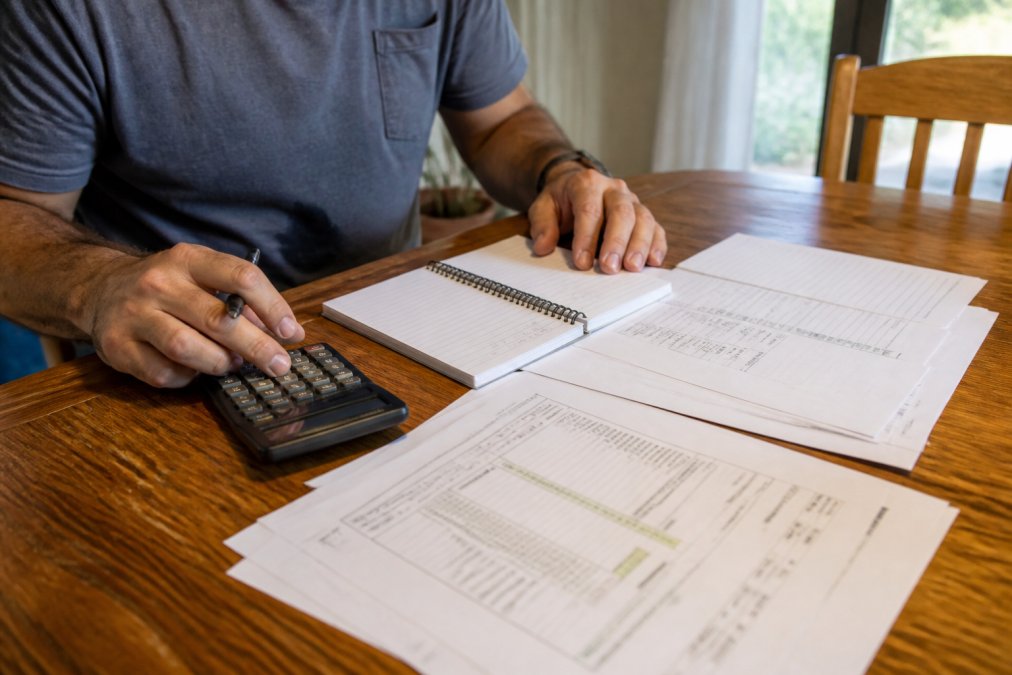
The residential volleyball court installation cost is just the beginning. Look at the Total Cost of Ownership (TCO) over the life of the court, including annual maintenance, periodic part replacement, and the costs of neglecting the surface.
Here is a practical breakdown of annual maintenance costs by surface type:
- Sand Courts: The primary ongoing cost is sand replenishment. Wind, rain, and play will gradually displace sand, with a common pattern of losing 1 to 2 inches over a few years. Adding just one inch of sand to a regulation-sized court is roughly 40 to 50 cubic yards, a significant delivery and labor cost. You'll also need a quality court rake. Over time, sand may need to be mechanically de-compacted or replaced after 10-15 years of heavy use.
- Modular Tile Courts: These require the least maintenance, mainly sweeping or blowing off debris and occasionally hosing down the surface. Keep a small supply of spare tiles on hand to replace any that crack. The sub-base is the most critical long-term component; if it settles or shifts due to freeze-thaw cycles, you will see uneven areas. Fixing a settled base is a major project, so proper compaction during initial installation is your best defense.
- Net System and Hardware: Regardless of your surface, your net system is exposed to the elements year-round. In Carbondale, the freeze-thaw cycle and UV exposure will take a toll. Check your net for fraying or stretching annually, and inspect the tensioning mechanism for rust and smooth operation. For permanent standards, check the posts for rust or corrosion, especially at the ground line.
A practical maintenance schedule looks like this:
- Monthly (Seasonal Use): Rake sand (or sweep tiles), check net tension, and remove leaves and debris.
- Seasonally: Inspect the perimeter curbing or edging for damage or shifting. After heavy rain, check for standing water or drainage issues.
- Annually: Top up sand as needed, tighten all hardware on the net system, and inspect posts for rust. For tile courts, check for any cracked or uneven tiles.
To help you estimate the true cost of your court, consider this simple TCO framework:
| Cost Category | Sand Court | Modular Tile Court |
|---|---|---|
| Annual Maintenance | Sand replenishment, raking, debris removal | Cleaning, occasional tile replacement |
| Major Periodic Costs | Sand de-compaction or full replacement (every 10-15 years) | Sub-base repair (if not installed correctly) |
| Equipment Lifespan | Net system (5-10 years), Sand (10-15 years) | Net system (5-10 years), Tiles (15-20+ years) |
Multi-sport court versatility is a smart consideration if you're already investing in the ground work. A modular tile surface that works for volleyball can also accommodate pickleball and basketball, making the court a year-round family amenity and improving your TCO by spreading the initial cost across multiple activities.
Conclusion
Building a backyard volleyball court in Carbondale is a significant project, but the cost is manageable when you break it into phases and make informed choices about surface, equipment, and installation. The ground work demands the most attention and budget, while the net system is where you can invest in quality without breaking your overall plan.
At Sports Vista USA, we carry a full range of volleyball systems from portable recreational sets to heavy-duty semi-permanent standards built for years of outdoor play. Check out our volleyball collection and build a court that your family and neighbors will use for decades.
Frequently Asked Questions
How much does it cost to install a volleyball court in your backyard?
Residential volleyball court installation cost varies widely based on surface type and site conditions. A basic grass court with portable equipment can cost well under $1,000. Sand courts typically run $5,000 to $15,000 depending on excavation, sand depth, and drainage. Modular tile or sport court surfaces cost more, often $15,000 and up. Site preparation, including grading and excavation, adds significant cost if your yard requires leveling. Get multiple quotes and factor in ongoing maintenance when planning your project budget.
Is a sand or grass volleyball court more cost-effective for residential use?
Grass is the most cost-effective surface initially because it requires no imported materials, but it offers inconsistent footing and poor drainage. Sand courts cost more upfront due to excavation and sand delivery, but they provide a proper playing surface that drains well and lasts longer with minimal maintenance. For regular play, sand is the better value over time. If budget is a concern, start with a grass court and upgrade to sand later, or consider a smaller sand court that fits your budget.
What site preparation is required for a backyard volleyball court?
Proper site preparation starts with marking the court dimensions and calling your local utility locator service. The area needs clearing, followed by excavation to remove topsoil and organic material. For sand courts, you need a stable sub-base with proper drainage slope, often including geotextile fabric to separate sand from soil. Perimeter curbing helps contain the sand. Leveling and soil compaction create a stable foundation. In areas with heavy clay or poor drainage, additional aggregate base may be needed before installing your volleyball net system.
How do professional installation costs compare to DIY volleyball court projects?
Professional installation typically costs $2,000 to $5,000 or more for labor on a residential sand court, depending on excavation depth and site access. DIY construction can save on labor but requires equipment rental, knowledge of drainage and soil compaction, and significant physical work. Many homeowners compromise by hiring professionals for excavation and grading while handling simpler tasks themselves. Consider the total cost of equipment rental, material delivery, and your time before deciding. For complex sites with drainage issues, professional expertise prevents costly mistakes.


Leave a comment
This site is protected by hCaptcha and the hCaptcha Privacy Policy and Terms of Service apply.