


Table of Contents
- Understanding Pickleball Paddle Lifespan
- How Playing Frequency Affects Paddle Durability
- Signs a Pickleball Paddle Is Worn Out
- Identifying Pickleball Paddle Dead Spots
- Pickleball Paddle Care and Storage Best Practices
- Replacement vs. Repair: Making the Right Call
- Choosing Your Next Paddle
- Conclusion
- Frequently Asked Questions
Last Updated: October 10, 2026
Understanding Pickleball Paddle Lifespan
A pickleball paddle is not a permanent investment. Like any sports equipment, it wears down with use and eventually loses the performance characteristics that make it effective on the court. Understanding when to replace your pickleball paddle helps you stay competitive and avoid frustration from equipment that's past its prime.

Most recreational paddles last anywhere from one to five years, depending on how often you play and how hard you push them. A casual player who hits the court once a week might get several years from a single paddle. A serious competitor playing multiple times per week will likely need a replacement much sooner.
Your paddle's core and surface degrade gradually. The honeycomb core loses its ability to absorb shock and return energy. The surface grit wears smooth, reducing spin and control. These changes happen slowly at first, then accelerate. One day you'll notice your shots feel different. That's your signal to start paying attention.
How Playing Frequency Affects Paddle Durability
Playing frequency is the single biggest factor determining paddle lifespan. A paddle used twice a week experiences different wear than one used five times per week. The more you play, the faster your equipment breaks down.
Recreational players (1-2 times per week) can expect a paddle to last 3-5 years before noticeable performance loss. Your paddle gets rest between sessions, allowing the core to recover slightly.
Frequent players (3-4 times per week) typically see performance decline within 1-3 years. The paddle gets less recovery time. The surface grit wears faster under constant friction. The core starts losing its pop earlier.
Competitive players (5+ times per week or tournament play) often need a replacement within 6-18 months. Aggressive drives, hard volleys, and constant play stress the paddle's materials relentlessly. Even high-quality paddles show significant wear within a season.
Hours of play matter more than calendar time. A paddle used intensively for six months might be as worn as one used casually for two years.
Signs a Pickleball Paddle Is Worn Out
Knowing what to look for helps you catch paddle decline before it ruins your game. Several clear warning signs indicate your paddle is losing effectiveness and approaching replacement time.
Loss of Surface Grit and Texture
The paddle's surface is designed to grip the ball and generate spin. Fresh paddles have a textured, slightly rough surface that catches the ball. Over time, this grit wears smooth from constant contact.
Run your hand across the paddle face. A new paddle feels slightly rough, almost like fine sandpaper. A worn paddle feels slick and smooth. This loss of texture directly reduces your ability to put spin on the ball. Dinks become less precise. Drives lose bite. Resets feel unpredictable.
You'll notice this first in your touch shots. Dinking becomes harder because the ball doesn't grip the paddle face the way it used to. You have to hit harder to get the same spin. That extra effort throws off your court positioning and control.
Reduced Power, Pop, and Ball Response
The paddle's core loses its elasticity over time. A fresh core bounces back quickly, storing and releasing energy efficiently. A worn core feels dead. Your shots lose the pop they used to have.
Hit a ball with your old paddle, then hit one with a new paddle. The difference is immediate. The new paddle snaps the ball back with authority. The old paddle feels sluggish. The ball seems to sit on the face longer before leaving.
This reduced pop affects your entire game. Drives don't travel as far. Volleys feel weak. Resets require more effort to clear the net. You compensate by hitting harder, which throws off your timing and accuracy.
Visible Cracks, Chips, and Delamination
Physical damage is the clearest sign your paddle needs replacing. Cracks in the face, chips on the edges, or separation between layers (delamination) all indicate structural failure.
Look at the paddle's edge guard. If it's cracked or peeling away, the paddle is starting to fail. Check the face for visible cracks, especially radiating from the center where impact stress is highest. Examine the back side too. Delamination appears as layers separating from each other, sometimes visible as slight gaps or bubbling.
Small cosmetic chips don't necessarily mean replacement time. But cracks that go through the surface or structural separation means the paddle is compromised. These paddles often fail during play, sometimes suddenly.
Identifying Pickleball Paddle Dead Spots
Dead spots are areas of the paddle face that don't respond normally. The ball hits dead spots with less energy transfer, producing weak or unpredictable shots.
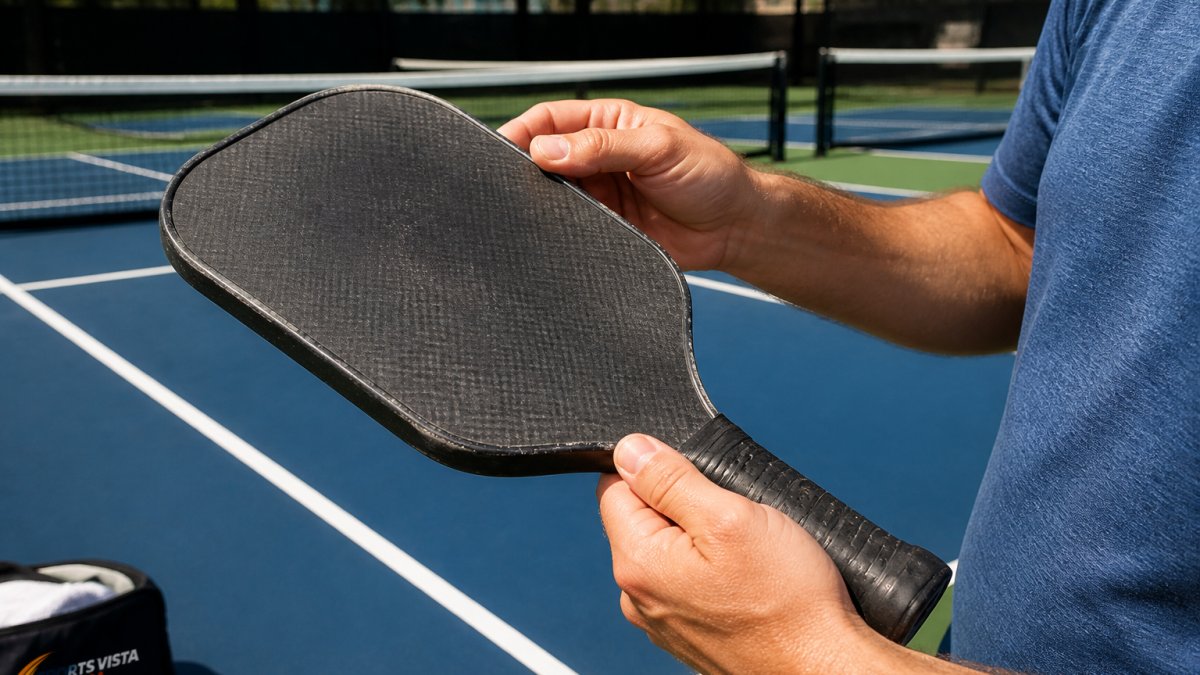
The tap test is your best tool. Hold the paddle in one hand and tap different areas of the face with your other hand's knuckles. Listen to the sound.
Tap systematically. Start at the center and work outward toward the edges. Listen for changes in pitch or tone.
The ball response test is more practical. During warm-ups, deliberately hit balls to different areas of the paddle face. Notice how the ball responds.
Center hits should feel solid and responsive. Edge hits naturally feel slightly different because the edge guard absorbs some energy.
Dead spots often expand over time. A small dead zone today becomes a larger problem next month. Once you identify them, monitor whether they grow.
Pickleball Paddle Care and Storage Best Practices
How you store and care for your paddle directly affects its lifespan. Simple practices can extend the time before you need to replace your pickleball paddle.
Grasp Pickleball Paddle - 16mm →

Storage environment matters. Keep your paddle in a cool, dry place. Extreme heat softens the core and can cause delamination. Cold makes the materials brittle.
Use a paddle cover or bag. Protect the paddle face from dust, dirt, and accidental impacts. A simple neoprene cover prevents surface damage and keeps the grit clean.
Clean the paddle face regularly. Dust and dirt reduce grip and spin. Wipe the face with a soft, damp cloth after play.
Avoid extreme impacts. Don't drop paddles or use them to hit the ground in frustration. Don't lean on them or put weight on the face.
Check your grip. A worn grip reduces control and comfort. If the grip is slippery or compressed, replace it.
Inspect regularly. Look at your paddle weekly during the season. Check for new cracks, edge damage, or surface wear. Catch problems early before they become severe.
| Care Task | Frequency | Impact on Lifespan |
|---|---|---|
| Wipe paddle face clean | After each session | Maintains grip and surface texture |
| Inspect for damage | Weekly during season | Catches problems early |
| Store in cool, dry place | Always | Prevents warping and delamination |
| Replace grip if worn | As needed (6-12 months) | Improves control and reduces paddle stress |
| Use protective cover | Always during storage | Prevents dust and accidental damage |
Replacement vs. Repair: Making the Right Call
Sometimes a paddle shows damage but isn't totally dead. Should you repair it or replace it? The decision depends on the damage type, the paddle's age, and your playing level.
Minor surface damage like small chips on the edge guard or light scratches on the face can often be ignored. These cosmetic issues don't affect performance.
Grip replacement is always worth doing. A new grip costs less than a new paddle and can restore comfort and control.
Edge guard separation is a gray area. If just the edge guard is peeling away but the paddle itself is intact, some players repair it with epoxy adhesive. This is a temporary fix.
Core delamination or visible cracks through the face mean replacement time. These are structural failures. Repairs might extend the paddle's life a few weeks, but the paddle is compromised.
Cost consideration: If your paddle cost less than a new entry-level paddle, replacement is simpler than repair. If you have an expensive paddle with minor damage, repair might make sense.
Choosing Your Next Paddle
When you're ready to replace your pickleball paddle, choosing the right one matters. Different paddles suit different playing styles and skill levels.

For control-focused players, the Warping Point Ascent Pickleball Paddle - Control in green delivers precision and stability. Its 16mm honeycomb core provides forgiveness on off-center hits while maintaining shot feedback.
For players seeking balanced performance, the Grasp Pickleball Paddle - 16mm combines forgiveness, shock absorption, spin, and stability. Its raw T700 carbon-fiber surface with Teflon coating supports spin and grip.
For power-focused players, the Warping Point Ascent Pickleball Paddle - Power in red emphasizes drive shots and aggressive play. The 16mm construction provides the core you need for controlled power.
For intermediate to advanced players, the Warping Point Neon Pickleball Paddle - Gen 3 offers balanced performance with premium materials. Its 16mm EdgeFusion Core with EVA reinforcement improves edge stability.
Consider your playing style. Do you win points through placement and spin, or through pace and power? Choose a paddle that matches your approach.
Conclusion
Knowing when to replace your pickleball paddle keeps your game sharp and prevents frustration from worn-out equipment. Watch for loss of surface texture, reduced pop and ball response, visible damage, and dead spots. Track your playing frequency and paddle age. Store your paddle properly to extend its life. When replacement time comes, choose a paddle that matches your playing style and skill level.
Sports Vista USA carries premium pickleball paddles designed for durability and performance. Whether you're a casual player building your first paddle collection or a competitive player upgrading to advanced equipment, we have options that fit your game. Our paddles feature quality construction, proven materials, and 30-day trials so you can find the right fit. Check out our pickleball paddle selection and find your next paddle today.
Frequently Asked Questions
How do you tell if your pickleball paddle needs to be replaced?
Your paddle needs replacement when you notice loss of surface grit, reduced power on shots, dead spots that produce inconsistent ball response, visible cracks or chips, or delamination of the core. A paddle that sounds dull instead of crisp, feels sluggish, or no longer grips the ball as it once did signals wear. Test by hitting dinks and drives at normal intensity, if the paddle feels unpredictable or unresponsive compared to when it was new, replacement timing has arrived.
What is the average lifespan of a pickleball paddle?
Recreational players typically get 1-3 years from a quality paddle, while frequent players may see 6-18 months of active use. Lifespan depends on playing frequency, intensity, and care. A casual player using their paddle once or twice weekly for recreational dinks and resets will see longer durability than an aggressive player logging 10+ hours weekly with hard drives and intense rallies. Proper storage and maintenance extend lifespan significantly.
Does how often you play affect how long a pickleball paddle lasts?
Yes, playing frequency directly impacts paddle wear. Recreational players who play 1-2 times per week experience slower degradation than frequent players logging 5+ sessions weekly. Aggressive play with hard drives and intense rallies accelerates wear compared to controlled dinks and resets. A paddle used for casual weekend play may last years, while the same paddle used in daily competitive training may show significant wear in months.
Can a pickleball paddle lose its pop over time?
Yes. As the paddle's core compresses and the surface texture wears down, the paddle loses its responsiveness and power output. This happens through repeated ball contact, moisture exposure, and temperature changes. The loss of pop is gradual, you may not notice it at first, but over months of regular play, shots that once felt crisp become sluggish. When you consistently hit the same shots with the same effort but see reduced ball speed and distance, your paddle's pop has diminished and replacement should be considered.
Ready to upgrade your game with a paddle built to last? Browse Sports Vista USA's pickleball paddle collection and discover the control, power, or balance you need for your next season on the court.


Leave a comment
This site is protected by hCaptcha and the hCaptcha Privacy Policy and Terms of Service apply.