


Table of Contents
- Why Pickleball Paddle Edge Guards Matter
- Understanding Pickleball Paddle Protection Tape
- How to Apply Pickleball Edge Guard to Your Paddle
- Choosing the Right Width and Adhesive Strength
- Durability, Weight, and Performance Impact
- Removing Edge Guard Tape Without Residue
- Frequently Asked Questions
Last Updated: September 23, 2026
Why Pickleball Paddle Edge Guards Matter
A pickleball paddle takes a beating. Every volley at the net, every hard court surface contact, every accidental drop chips away at the frame. Without protection, the paddle's edges deteriorate quickly, affecting both performance and longevity. Pickleball paddle edge guard protectors solve this problem by creating a durable barrier that absorbs impact and prevents the frame from splintering or cracking.
A quality edge guard applied early extends paddle life significantly and maintains consistent performance throughout the season.
Understanding Pickleball Paddle Protection Tape
Pickleball paddle protection tape is a thin adhesive strip applied to the edges and perimeter of the paddle frame. It shields the paddle from chips, cracks, and wear caused by court contact and impact during play.
What Edge Guard Does
Edge guard serves three primary functions. First, it absorbs impact from the court surface, protecting the paddle frame from direct contact. Second, it prevents moisture from seeping into the paddle's core, which can weaken the structure over time. Third, it reduces vibration and sound on off-center hits, improving feel and control.
The tape also protects the paddle's aesthetic appeal, keeping equipment looking newer longer.
Types of Edge Protection Available
Clear edge guard tape is the most popular option. It protects without altering the paddle's appearance, so the original design and graphics remain visible. Clear tape typically comes in standard widths that fit most paddle frames.
Colored edge guard tape offers both protection and customization, with identical functionality to clear tape.
How to Apply Pickleball Edge Guard to Your Paddle
Proper application determines whether edge guard performs as intended. A poorly applied tape peels, bunches, or leaves residue. Done correctly, it stays secure for an entire season of play.
Preparation and Cleaning
Start with a clean paddle. Dust, dirt, and oils prevent adhesive from bonding properly. Use a soft cloth and mild soap to clean the paddle edges thoroughly. Pay special attention to the frame perimeter where tape will adhere. Dry completely before proceeding.
If the paddle has chips or cracks, edge guard prevents future damage but won't repair existing damage.
Remove any existing tape residue using rubbing alcohol, as it interferes with new tape adhesion.
Step-by-Step Application Process
Measure the paddle perimeter; most paddles require 8-12 feet of edge guard tape.
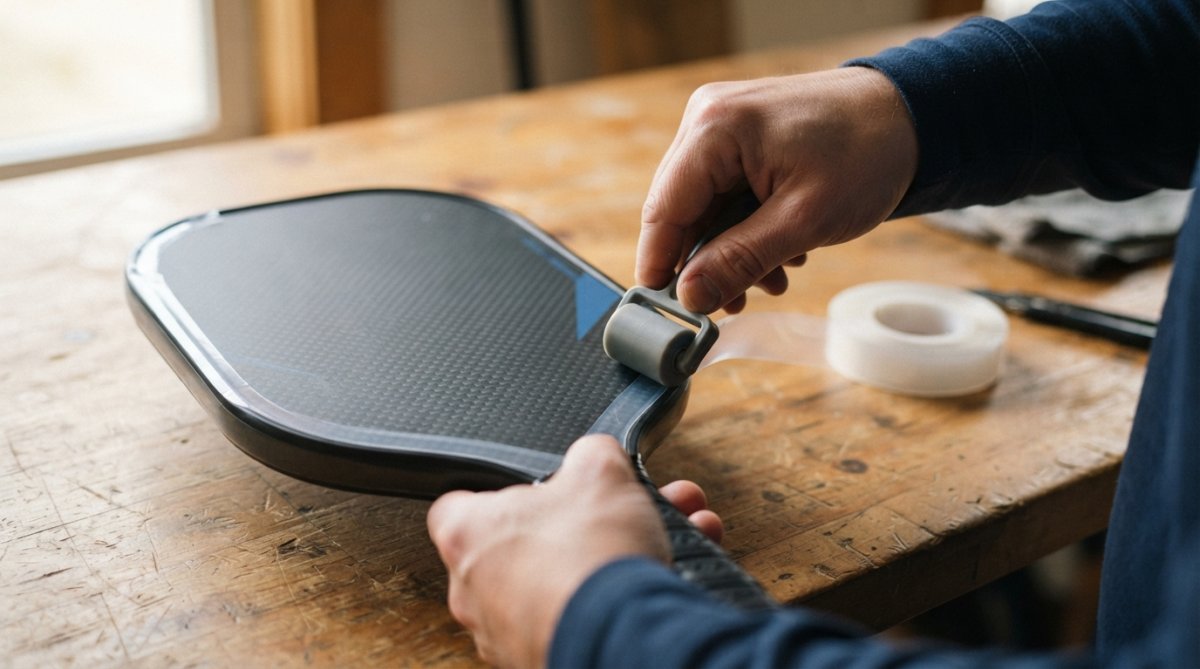
Start at the paddle's top edge, positioning tape carefully and pressing firmly while maintaining even tension. Smooth out air bubbles as you work around the frame.
Work around the paddle in one continuous motion to avoid thick overlaps that can catch during play.
Use a roller tool or the edge of a credit card to press the tape firmly into place. This ensures maximum adhesion and removes trapped air. Apply pressure for several seconds along the entire length.
Allow the tape to set for at least 24 hours before playing. This gives the adhesive time to cure fully and bond securely to the paddle frame.
Avoiding Common Installation Mistakes
Rushing the application causes peeling and improper bonding; slow, deliberate work yields better results.
Applying tape to a dirty paddle guarantees failure; clean thoroughly before starting.
Stretching tape as you apply it causes premature peeling; maintain even, relaxed tension throughout.
Keep overlaps minimal to ensure complete coverage without bulk that interferes with grip and play.
Choosing the Right Width and Adhesive Strength
Edge guard tape comes in standard widths, typically 28mm or 30mm. The difference seems minor but affects coverage and performance.
Narrower tape (28mm) works well for thinner frames and lighter feel.
Wider tape (30mm) offers more coverage and protection for larger frames with minimal weight increase.
Adhesive strength varies between products. Heavy-duty adhesive bonds more securely but can be difficult to remove without residue. Standard adhesive balances holding power with removability for future replacement.
Competitive players benefit from heavy-duty adhesive; recreational players find standard adhesive sufficient and easier to replace.
Durability, Weight, and Performance Impact
How Edge Tape Affects Paddle Balance and Swing Weight
Quality edge guard adds minimal weight, typically 0.3 to 0.5 ounces (roughly 4-6% of paddle weight), negligible for recreational players but noticeable for competitive athletes.
Edge guard applied around the frame perimeter increases moment of inertia, slightly slowing swing speed but improving stability on off-center hits, a "dampened" or "more forgiving" feel.
Edge guard doesn't relocate the paddle's balance point but increases rotational inertia, making the paddle resist twisting more on off-center contact.
For competitive players, the slight swing-speed reduction (less than 1-2 mph) is offset by improved stability and reduced fatigue from impact shock.
Aerodynamic Impact and Swing Dynamics
Edge tape's aerodynamic effect is minimal but measurable for high-speed players, slightly increasing air resistance during fast drives and overhead smashes.
The aerodynamic drag is negligible (roughly 0.5-1 mph for aggressive players) and imperceptible for most recreational players; stability benefits typically outweigh minimal speed loss.
Smooth, clear tape creates less turbulence than textured or colored tape, making it the better choice for competitive players prioritizing aerodynamic efficiency.
Lifespan and Replacement Frequency
A properly applied edge guard lasts an entire season for recreational players; competitive players may need replacement every 6-8 months due to increased wear.
Replace tape when it begins peeling, loses holding power, or shows visible wear; peeling accelerates quickly as moisture seeps underneath.
Check tape monthly for early peeling, especially after intense play or temperature extremes, to prevent mid-match failure.
Many serious players replace edge guard seasonally as routine maintenance, ensuring consistent performance and eliminating failure risk during matches.
Impact on Paddle Feel and Control
Players frequently report improved feel and control with edge guard applied. The protective layer reduces vibration transmission from off-center hits, creating a slightly dampened sensation that many find more comfortable during extended play sessions. This is particularly noticeable on dinking exchanges at the net, where soft touch and feedback are critical.
The tape also reduces the "ping" or hollow sound that occurs on off-center hits. While this is primarily an aesthetic change, it contributes to the overall feel of the paddle. Some players prefer the muted sound; others find it less satisfying than the natural paddle sound.
For players with arm or shoulder sensitivity, the vibration dampening from edge guard can reduce fatigue and discomfort. The tape absorbs some of the shock that would otherwise transmit through the paddle handle to the player's arm, making extended play sessions more comfortable.
Removing Edge Guard Tape Without Residue
Removing old edge guard tape properly is critical to paddle longevity. Poor removal leaves sticky residue that weakens new tape adhesion, creates uneven surfaces, and can damage the paddle's finish if tackled incorrectly. This is a high-intent search need that most competitors overlook, yet it's essential knowledge for players who replace tape seasonally or switch paddle protection strategies.
Safe Removal Techniques
Start by identifying the tape type and adhesive strength. Clear, standard-adhesive tape peels more easily than heavy-duty or colored variants. Knowing what you're working with prevents aggressive removal that damages the paddle frame.
Gently lift one corner of the tape using a plastic tool, old credit card, or plastic scraper, never metal, which can gouge the paddle surface.
Residue Removal and Surface Preparation
After tape removal, adhesive residue almost always remains. The amount depends on tape quality, paddle surface material, and how long the tape was applied. Residue left behind prevents new tape from bonding properly and creates a tacky, uneven surface.
Drying and Inspection Before Reapplication
Allow the paddle to air-dry completely after residue removal. Any moisture or residual alcohol prevents new edge guard tape from adhering properly. This typically takes 30-60 minutes depending on humidity and ventilation. You can speed drying by using a clean, dry cloth to wipe the paddle frame, but avoid heat sources that might warp the paddle.
Common Residue Removal Mistakes
Using excessive heat can warp composite paddle frames or damage graphics. Keep heat moderate and maintain distance from the paddle surface.
Frequently Asked Questions
Are pickleball paddle edge guards worth it?
Yes. Edge guards protect the paddle frame from chips and dings that occur during play and storage. Without protection, impact damage can spread and weaken the paddle structure over time. A quality edge guard extends paddle longevity significantly and maintains the aesthetic appeal of your equipment. For players who use their paddles regularly, edge protection is a practical investment.
Should you put edge tape on a pickleball paddle?
Edge tape is recommended, especially for paddles you plan to keep long-term. It shields the paddle frame from wear and tear that naturally happens on the court. If you play frequently or want to preserve your paddle's condition, edge tape is worth applying. Even casual players benefit from the added durability and protection it provides against accidental impacts.
Does edge tape affect the weight or balance of a pickleball paddle?
Quality edge guard tape adds minimal weight to your paddle, typically just a few grams. This small addition has negligible impact on swing balance or aerodynamics for most players. The protection gained far outweighs any minor weight difference. If you're sensitive to paddle weight, choose thinner tape options, but the overall performance effect is minimal.
How often should you replace pickleball paddle edge tape?
Replacement frequency depends on play intensity and wear patterns. Casual players may go 6-12 months before needing replacement, while frequent players might replace tape every 2-4 months. Watch for peeling edges, loss of adhesive strength, or visible damage to the underlying paddle frame. When the tape no longer provides a protective barrier, it's time to remove it and apply fresh protection.


Leave a comment
This site is protected by hCaptcha and the hCaptcha Privacy Policy and Terms of Service apply.