


Table of Contents
- Volleyball Net Systems Comparison Table
- Portable Volleyball Net Systems for Schools and Recreation
- Semi-Permanent Volleyball Net Systems for Durability
- Volleyball Net Installation Guide: Setup Time and Process
- Key Features That Speed Up Setup
- Portable vs. Semi-Permanent: Setup and Performance Tradeoffs
- Choosing the Right System for Your Needs
- Frequently Asked Questions
Last Updated: August 23, 2026
If you're shopping for a volleyball net system, the choice between portable, semi-permanent, and permanent setups determines everything: how fast you can play, how long the system lasts, and whether you're spending your time setting up or actually playing. The best volleyball net systems for quick setup balance portability with stability, so you can get a game started without wrestling with cables, complicated tensioning hardware, or hours of installation work.
Sports Vista USA carries a range of volleyball net systems designed for different use cases, from lightweight portable setups for backyards and parks to durable semi-permanent systems for schools and recreation facilities. This guide breaks down the key differences, walks you through setup considerations, and helps you choose the right system for your needs.
Volleyball Net Systems Comparison Table
| System Type | Setup Time | Portability | Best For | Key Advantage |
|---|---|---|---|---|
| Portable (Wireless) | 15-30 minutes | Excellent | Backyards, parks, casual play | Tool-free setup, easy transport |
| Portable (Lightweight) | 20-35 minutes | Very good | Grass courts, recreational leagues | Affordable, dependable performance |
| Recreational (Heavy-Duty) | 30-45 minutes | Good | Families, schools, camps | Stability with push-button height adjustment |
| Semi-Permanent (2-3/8" Standards) | 1-2 hours | Limited | Schools, recreation centers | Professional durability, flexible placement |
| Semi-Permanent (3-1/2" Standards) | 1-2 hours | Limited | High-traffic facilities, parks | Maximum stability for frequent use |
The table above shows the fundamental tradeoff: faster setup means less durability and portability, while semi-permanent systems take longer to install but deliver professional-grade stability for heavy use. Your choice depends on how often you're setting up and taking down, how many players you're serving, and whether you need the system to stay in one place.
Portable Volleyball Net Systems for Schools and Recreation
Portable systems are the go-to choice when speed matters most. These systems are designed to be assembled and disassembled repeatedly without tools or specialized hardware, making them ideal for schools, parks, recreation programs, and multi-sport facilities.
Gared Mongoose Wireless Volleyball System
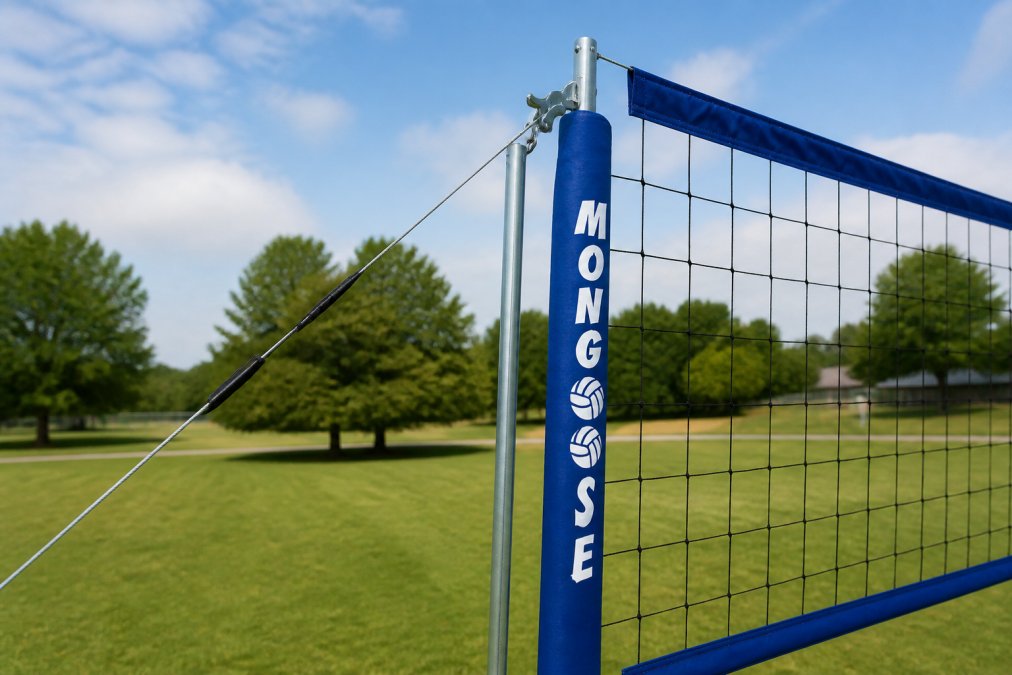
The Mongoose Wireless eliminates cables and complicated tensioning hardware entirely. Instead of wrestling with guy lines and anchor points, you get a clean, wireless design that provides consistent net tension without the setup headache.

This system works on grass, sand, and hard courts, making it versatile for different playing surfaces (peer-reviewed research). The tool-free design means your team can have the net up and ready in minutes. Schools and recreation programs choose this system because it reduces setup time and increases actual play time. The wireless approach also means fewer tripping hazards and a cleaner court appearance.
Best for: Backyards, parks, recreation programs, schools, camps, and multi-sport facilities that prioritize quick setup and portability.
What makes it work: The cable-free design simplifies assembly and reduces maintenance. You're not troubleshooting tension problems or replacing worn cables.
Gared Mongoose Lt Volleyball System
The Mongoose Lt is the lightweight, affordable option in the portable category. It's built for grass courts and outdoor recreational play, designed for backyards, parks, camps, and recreational leagues that need dependable performance without premium pricing.
This system prioritizes easy setup and transport. The lightweight construction means one or two people can handle assembly and breakdown without strain. Parks departments and school recreation programs often stock these because they're affordable and simple to maintain.
Best for: Grass courts, backyards, parks, camps, recreational leagues, and budget-conscious buyers who need portable volleyball equipment.
What makes it work: Lightweight design and straightforward assembly keep setup time minimal while delivering reliable net performance.
First Team Apollo Recreational Volleyball System
The Apollo bridges the gap between ultra-portable and semi-permanent. It's more substantial than lightweight portable systems but still portable enough to move and store. The heavy-duty mesh construction and durable telescoping posts handle repeated recreational use while remaining transportable.
What sets the Apollo apart is the push-button height adjustment. Instead of adjusting net height with tools or manual cranks, you simply press a button to set the height for different age groups and skill levels. This makes it perfect for schools and camps serving mixed ages. The included boundary rope helps create a defined playing area, and protective post pads add safety.
Everything packs into a convenient carry-all storage bag, so transport and storage are manageable. The Apollo delivers stability that lightweight systems can't match while keeping setup faster than semi-permanent installations.
Best for: Families, schools, camps, and recreational facilities that want durability and easy height adjustment without semi-permanent installation complexity.
What makes it work: Push-button height adjustment saves time and eliminates frustration. Heavy-duty construction handles active play without wobbling or sagging.
Semi-Permanent Volleyball Net Systems for Durability
Semi-permanent systems stay in one location for extended periods. They're designed for schools, parks, recreation centers, and other facilities where the net stays up throughout a season or year. Installation takes longer, but you get professional-grade stability and durability that portable systems can't match.
Gared Sideout with 2-3/8in Standards
The Sideout with 2-3/8in OD standards is the entry point to semi-permanent volleyball installations. The smaller post diameter keeps costs lower while still delivering solid stability for most recreational and school programs.

This system is built for outdoor courts and designed for backyards, recreation centers, schools, and parks. The semi-permanent design means you install it once and leave it in place, eliminating the weekly setup routine. The 2-3/8in post diameter provides adequate strength for typical recreational use and competitive school play.
Best for: Schools, recreation centers, parks, and facilities with moderate to high use where you want professional durability without the maximum post diameter.
What makes it work: Semi-permanent installation means no more weekly setup. The post diameter is sized right for most recreational programs.
Gared Sideout with 3-1/2in Standards
The Sideout with 3-1/2in OD standards is the heavy-duty choice for high-traffic facilities. The larger post diameter adds significant strength and stability, making it the right choice for schools, parks, recreation centers, and facilities that host frequent, intense play.
The larger diameter posts resist bending and wobbling under heavy use (peer-reviewed research). Facilities that run daily programs or host tournaments benefit from this extra durability. The semi-permanent design combines professional-level performance with installation flexibility, you can leave it up for a season and relocate it later if needed.
Best for: Schools, parks, recreation centers, athletic facilities, and high-traffic venues where durability and stability are non-negotiable.
What makes it work: The 3-1/2in post diameter handles intense, frequent play without flex or sag. Professional-grade stability supports competitive play.
Volleyball Net Installation Guide: Setup Time and Process
Understanding the installation process helps you choose the right system for your facility. Setup time varies dramatically based on system type.
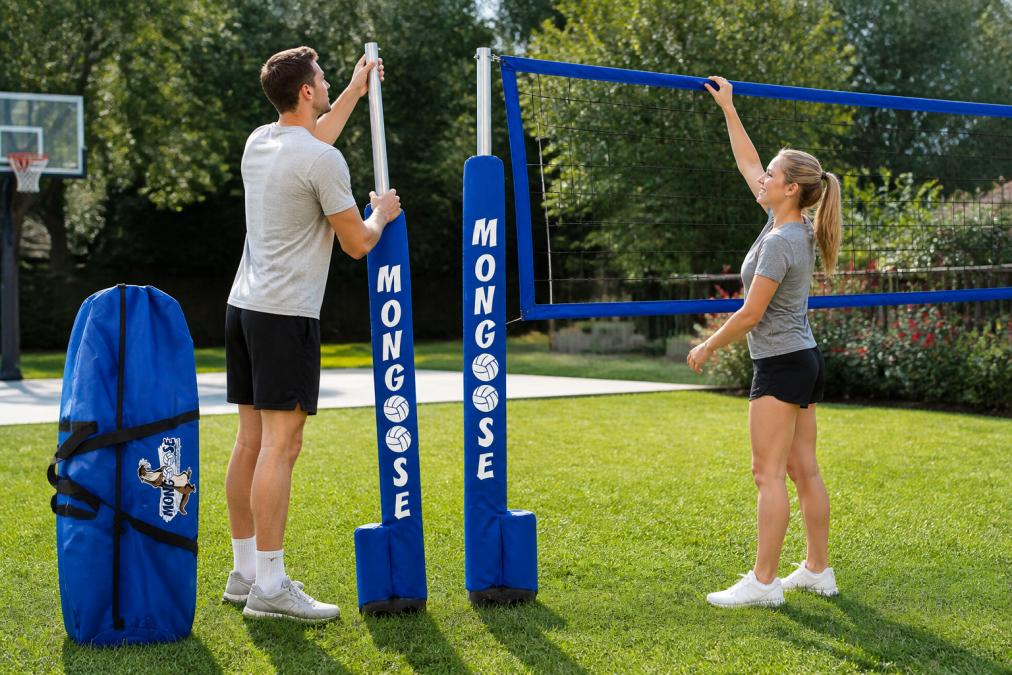
Portable systems (wireless and lightweight): These typically require 15-35 minutes for one or two people. You're assembling poles, attaching the net, adjusting height, and securing guy lines if needed. Wireless systems are fastest because you're not dealing with cable tensioning.
Recreational heavy-duty systems: Expect 30-45 minutes. The heavier construction and push-button height adjustment add complexity compared to lightweight portables, but you're building a more stable setup that won't shift during play.
Semi-permanent systems: Installation typically takes 1-2 hours. You're digging post holes, setting concrete footings, or using ground anchors to secure the standards permanently. The initial investment of time pays off because the net stays in place all season without weekly reassembly.
The key decision point: if you're setting up and breaking down weekly, portable systems save enormous time. If the net stays up for months, semi-permanent systems eliminate the repetitive setup work entirely.
Key Features That Speed Up Setup
Certain design features separate fast-setup systems from slow ones. Understanding what makes a system quick to assemble helps you prioritize the right features for your situation.
Wireless tensioning systems: Systems like the Mongoose Wireless eliminate cables and complicated hardware. You're not adjusting tension, replacing worn cables, or troubleshooting sag problems.
Tool-free assembly: Any system that doesn't require wrenches, screwdrivers, or hex keys saves time and frustration. Look for quick-release mechanisms, push-button adjustments, or snap-together components.
Telescoping poles: Poles that extend and lock in place are faster to set up than poles you have to assemble from multiple pieces.
Push-button height adjustment: Systems like the Apollo that adjust net height with a button instead of manual cranks or tools cut setup time significantly, especially if you're changing heights for different age groups.
Included carry bags and boundary lines: Systems that pack neatly into storage bags are easier to transport and set up repeatedly.
Ground anchors and guy lines: For portable systems, quick-release ground anchors and pre-attached guy lines reduce setup time.
These features compound. A wireless system with tool-free assembly and telescoping poles will be dramatically faster than a system requiring manual tensioning, tools, and component assembly.
Portable vs. Semi-Permanent: Setup and Performance Tradeoffs
The choice between portable and semi-permanent systems comes down to how you'll use the net.
Portable systems win on flexibility and speed. You can set up in 15-45 minutes, move the net to different locations, and take it down when you're done. This works perfectly for backyards, parks that host multiple sports, recreation programs that share court space, and facilities that need to reconfigure layouts seasonally. Schools that use the same court for volleyball, badminton, and other activities benefit from portability.
The tradeoff is stability and durability. Portable systems wobble more under intense play, net sag develops faster, and you're replacing components more frequently. For casual and recreational play, this is acceptable. For competitive programs, it becomes frustrating.
Semi-permanent systems win on stability and durability. Once installed, the net stays tight, posts don't flex, and the system handles intense, frequent play without degradation. Professional-grade performance is the payoff for the installation investment. Schools and parks that run daily programs see the value immediately.
The tradeoff is installation time and inflexibility. You're committing the net to one location for months. Moving it requires disassembly. For facilities with dedicated court space, this is fine. For multi-use spaces, it's a liability.
The middle ground: Heavy-duty recreational systems like the Apollo offer more stability than lightweight portables while remaining portable enough to move. They're ideal for families and smaller programs that want durability without semi-permanent installation.
Choosing the Right System for Your Needs
Your decision should match your use case and facility type.
Homeowners and casual players: Portable systems are the obvious choice. The Mongoose Lt offers reliable performance at an affordable price. If you want the fastest setup, the Mongoose Wireless eliminates cable complexity.
Schools and recreation programs: This depends on whether the net stays in one place. If you're using the same court all season, a semi-permanent system delivers professional stability that justifies the installation investment. If you're moving the net between courts or storing it seasonally, a heavy-duty recreational system like the Apollo balances durability with portability.
Parks and multi-sport facilities: Semi-permanent systems make sense for dedicated volleyball courts. For multi-use spaces where volleyball shares court time with other sports, portable systems let you reconfigure the space quickly.
High-traffic facilities and competitive programs: The 3-1/2in Sideout semi-permanent system is built for this. The larger post diameter and professional-grade stability handle intense, frequent play without compromise.
Budget-conscious buyers: The Mongoose Lt is the most affordable option and delivers dependable performance for recreational play.
Buyers prioritizing setup speed: The Mongoose Wireless is the fastest portable system because it eliminates cable tensioning. The Apollo is the fastest recreational system with its push-button height adjustment.
Start by answering these questions: How often will you set up and break down? Will the net stay in one place or move between locations? How many players and how intense is the play? Your answers point toward the right system type and specific product.
Finding the best volleyball net system for quick setup means matching the system type to your facility and use case. Portable systems from Sports Vista USA, the Mongoose Wireless, Mongoose Lt, and First Team Apollo, deliver fast assembly and dependable performance for recreational play and school programs. Semi-permanent systems like the Gared Sideout provide professional-grade stability for facilities that keep the net in one place.
Compare volleyball systems at Sports Vista USA, where you can review detailed specifications, read assembly instructions, and see which system fits your court and budget. Not sure which setup is right for your facility? Call or text 618-720-0192 to speak with our team. We help schools, parks, recreation programs, and homeowners choose the right volleyball net system for their needs.
Frequently Asked Questions
Q: What is the fastest volleyball net system to set up?
A: Wireless portable systems like the Gared Mongoose Wireless offer the fastest setup because they eliminate cables and complex tensioning hardware. Tool-free designs mean you can assemble and deploy the net in minutes without special tools. The Mongoose Lt is similarly quick for grass courts. Semi-permanent systems take longer because they require post placement and anchoring but deliver better stability for frequent use.
Q: Which volleyball net system is best for schools and recreation programs?
A: Portable volleyball net systems for schools should balance quick setup with durability. The First Team Apollo combines heavy-duty mesh, push-button height adjustment, and boundary rope in one package, making it ideal for schools managing multiple courts. For programs needing faster deployment, the Gared Mongoose Wireless eliminates cable hassles. Semi-permanent Sideout systems work well for dedicated outdoor court spaces where setup speed matters less than long-term performance.
Q: How long does volleyball net installation typically take?
A: Portable systems install in 10-30 minutes depending on familiarity with the setup. Wireless designs like the Mongoose are fastest because they skip cable and tensioning steps. Traditional portable nets with guy lines take slightly longer. Semi-permanent systems require ground anchoring and post placement, typically 1-3 hours for initial installation, but then remain set up for the season. Refer to your system's assembly instructions for exact timelines.
Q: What makes a volleyball net system durable for outdoor play?
A: Durability depends on pole diameter, mesh quality, and material protection. Larger-diameter posts (3-1/2 inches vs. 2-3/8 inches) provide better stability and weather resistance. Heavy-duty mesh construction resists UV damage and fraying. Rust-proof or powder-coated metal prevents corrosion. Semi-permanent systems like the Gared Sideout offer professional-grade durability for high-traffic facilities. Portable systems work well for casual play but require regular inspection and storage indoors during off-season.
Q: Can I use a portable volleyball net system for competitive play?
A: Portable systems work for recreational and casual competitive play, but tournament-grade volleyball requires semi-permanent or permanent installations with precise net tension and height control. The First Team Apollo provides stable performance for competitive recreation, while Sideout semi-permanent systems meet durability and tension standards for organized leagues. Check your league's equipment requirements before purchasing.
This article was written using GrandRanker


Leave a comment
This site is protected by hCaptcha and the hCaptcha Privacy Policy and Terms of Service apply.