
Table of Contents
- Understanding Commercial Sports Equipment Bulk Pricing
- How Volume Discounts Work in Sports Equipment Procurement
- Wholesale Basketball Hoops for Schools and Athletic Programs
- Bulk Sports Equipment Procurement Best Practices
- Total Cost of Ownership vs. Unit Price
- Regulatory Compliance and Safety Standards for Bulk Facility Equipment
- Getting Started with Your Bulk Equipment Order
- Frequently Asked Questions
Last Updated: September 4, 2026
Understanding Commercial Sports Equipment Bulk Pricing
Commercial sports equipment bulk pricing is the discounted unit rate a supplier offers when a buyer purchases multiple items or an entire facility package in a single order. For schools, parks, churches, and athletic programs in Carbondale, this approach consolidates needs into one manageable procurement event while stretching capital budgets.
Suppliers spread fixed costs like processing, packaging, and freight across more units and pass savings to you. Bulk pricing structures vary: some offer flat percentage discounts above a dollar threshold, others use tiered breaks based on quantity. Understanding which model applies is essential to forecasting actual cost.
How Volume Discounts Work in Sports Equipment Procurement
Volume discounts typically follow one of two models: tiered quantity breaks (discounts at specific unit counts) or dollar-threshold breaks (discounts at total order value).
Tiered Quantity Breaks
Many wholesalers structure discounts around unit count. A basketball hoop supplier might offer 1-2 units at list price, 3-5 units at 10-15% off, 6-10 units at 20-25% off, and 11+ units at 30-40% off. Larger production runs reduce per-unit handling costs. For a school district outfitting three gyms, hitting the 6+ unit threshold often determines budget approval.
Dollar-Threshold Breaks
Other suppliers anchor discounts to total order value: no discount under $5,000, 8% for $5,000-$15,000, 15% for $15,000-$40,000, and 20-25% for $40,000+. This model rewards consolidation. A park district buying hoops, padding, storage, and nets in one order reaches a higher tier than purchasing hoops alone.
Minimum Order Quantities (MOQ)
Many commercial suppliers impose a Minimum Order Quantity (MOQ): standard equipment often requires 2-3 units or $3,000-$5,000; specialized items may require 5+ units; full facility packages may have no MOQ if total value is substantial. For Carbondale facilities, a church installing one hoop may not qualify for bulk pricing, while a recreation department upgrading two courts will likely unlock savings.
Factors That Influence Your Discount Rate
Several variables affect discount rates: product mix (combined orders qualify for better rates), lead time flexibility (6-8 week timelines unlock freight consolidation), repeat purchasing (multi-year commitments secure preferred pricing), payment terms (upfront payment may yield 2-5% additional discount), and seasonal timing (off-season orders see better availability).
Comparing Discount Models: A Practical Example
Consider a scenario: a Carbondale parks department needs to outfit two outdoor courts with in-ground basketball systems, padding, and storage.
| Scenario | Unit Count | Order Value | Discount Tier | Effective Cost per Unit |
|---|---|---|---|---|
| Single court only | 1 hoop + accessories | ~$4,500 | Below MOQ | List price |
| Both courts, standard lead time | 2 hoops + accessories | ~$9,000 | 10-15% | 10-15% savings |
| Both courts, flexible lead time | 2 hoops + accessories | ~$9,000 | 15-20% | 15-20% savings |
| Both courts + multi-year commitment | 2 hoops + accessories + future orders | ~$9,000 + | 20%+ | 20%+ savings |
The difference between "below MOQ" and "20% discount" can mean $1,800-$2,700 in savings on a $9,000 order, enough to fund additional court accessories or extend the project scope.
How to Request and Compare Quotes
When requesting a bulk quote, provide: complete item list with quantities and specs, desired delivery date, installation requirements, and future purchasing plans. Ask the supplier to itemize unit price, subtotal, discount tier, freight charges, lead time, and warranty terms. Comparing three quotes side-by-side reveals the best total cost of ownership, not just lowest unit price.
Wholesale Basketball Hoops for Schools and Athletic Programs
Wholesale basketball hoops for schools must endure daily use, weather, and occasional vandalism. Commercial-grade hoops feature heavier backboards, reinforced rims, and powder-coated steel poles. For Carbondale schools, the buying decision centers on durability and safety certification. A school district equipping multiple gyms needs consistent specifications so maintenance teams stock a single set of replacement parts. Sports Vista USA offers in-ground and adjustable basketball systems built for school schedules and community leagues, with options for junior high and high school regulation play.
Bulk Sports Equipment Procurement Best Practices
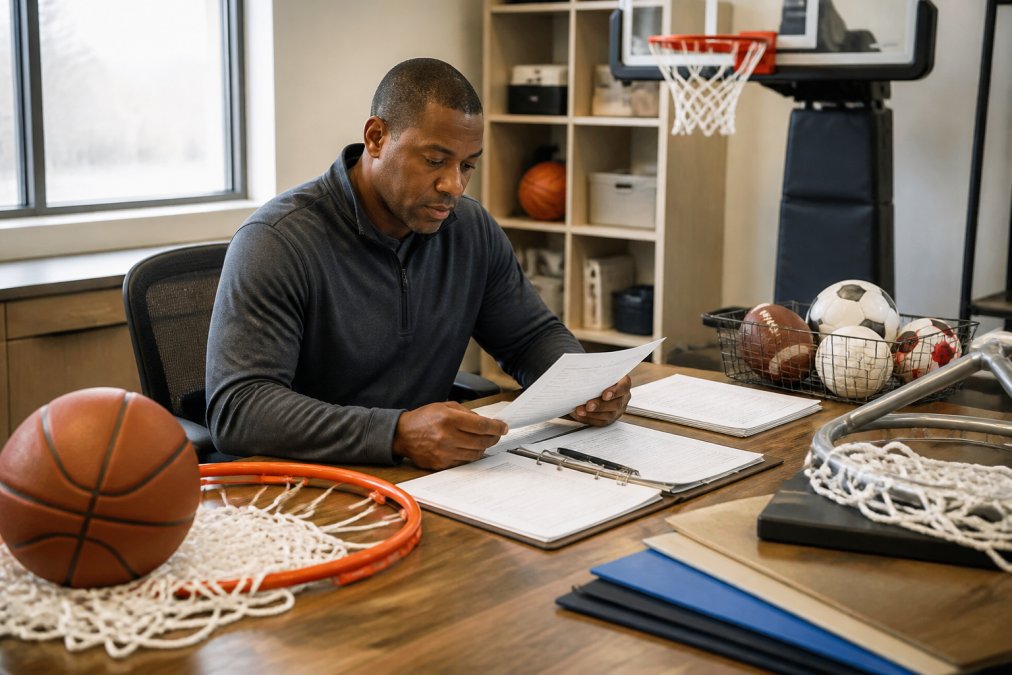
Successful bulk procurement requires coordination across purchasing, logistics, facility planning, and installation. The process differs for schools, parks, churches, and recreation departments, but underlying principles remain consistent.
Phase 1: Planning and Needs Assessment
Begin 3-6 months before installation.
-
Audit existing inventory. Document what is salvageable, needs replacement, or is missing. Take photos of court layouts and hoop conditions to prevent over-ordering.
-
Define must-have specifications. Regulation dimensions, backboard size, rim height, and mounting type are non-negotiable. Consult your league for exact requirements (e.g., regulation hoops are 10 feet high; adjustable systems should accommodate 8-10 feet for youth programs).
-
Consolidate your list. Combine all needs, hoops, padding, nets, storage, lighting, accessories, into one master document. This unlocks bulk pricing; fragmented orders rarely qualify for volume discounts.
-
Identify space and installation constraints. Measure court area, check overhead clearance, note ground conditions, and identify utility lines. In-ground systems require excavation and concrete; portable systems need stable, level surfaces. This information is critical for freight and installation scheduling.
Phase 2: Supplier Selection and Quoting
-
Request itemized quotes from 2-3 suppliers. Provide complete list, specifications, and desired delivery date. Ask for unit pricing, volume discount and MOQ, freight charges and delivery method, lead time, installation support, and warranty coverage.
-
Evaluate total cost of ownership, not just unit price. A 15% discount with high freight may cost more than a 10% discount with included regional delivery. For Carbondale facilities, proximity to the supplier's distribution hub matters, local suppliers often offer faster lead times and lower freight costs.
Phase 3: Shipping and Logistics Coordination
Shipping large orders requires careful planning.
Freight Methods and Lead Times:
-
LTL (Less Than Truckload): For orders not filling a full trailer. Typical for 2-5 hoops plus accessories. Lead time: 5-10 business days.
-
Full Truckload (FTL): For large facility packages (10+ hoops, extensive padding, lighting, storage). Lead time: 7-14 days. More economical per unit; consolidates multiple shipments.
-
Local or Regional Delivery: Some suppliers offer direct delivery from nearby warehouses. For Carbondale, this is a significant advantage. Lead time: 2-5 days.
Coordinating Delivery with Installation:
Schedule delivery 1-2 weeks before installation to allow time for inspection, staging, crew coordination, and ordering missing fasteners. For in-ground systems, delivery must precede concrete work. Communicate facility access hours, loading dock availability, and weight or size restrictions to the supplier before shipment.
Freight Damage and Claims:
Inspect all items immediately upon delivery and document any damage with photos. Note discrepancies on the freight bill before signing and report damage to the supplier within 24 hours. Keep all packaging for claims. Most suppliers cover freight damage under warranty, but prompt reporting is essential.
Phase 4: Compliance and Safety Verification
- Verify compliance with applicable safety standards. Before installation, confirm every component meets requirements: ASTM F1159 (Basketball Goals and Supports), CPSC guidelines for public facilities, local building codes for permanent installations, and ADA accessibility if applicable. Request compliance documentation from your supplier.
Phase 5: Installation Planning
-
Determine installation method: in-house or professional. In-house installation suits portable systems and experienced staff (2-4 hours per hoop). Professional installation is recommended for in-ground systems, complex layouts, or facilities without experienced staff. Suppliers often offer installation services or referrals.
-
Plan for post-installation support. Assign staff responsibility for monthly safety inspections, seasonal maintenance, and parts inventory.
Local Considerations for Carbondale-Area Facilities
Southern Illinois presents unique factors: Regional freight, Carbondale is served by Midwest hubs; local suppliers offer faster delivery and lower costs. Weather and durability, Hot, humid summers and freezing winters accelerate rust; specify powder-coated steel and stainless fasteners. Installation timing, Schedule outdoor installations in spring or early fall; avoid freeze-thaw cycles for concrete. Local services, Ask suppliers for local installer referrals to reduce travel costs.
Putting It Together: A Timeline Example
For a Carbondale school district planning to outfit two gyms with new basketball systems and court padding:
- Month 1: Audit existing equipment, define specifications, consolidate needs list
- Month 2: Request quotes from 2-3 suppliers, evaluate total cost and lead times
- Month 3: Place order with selected supplier, confirm delivery date and installation schedule
- Month 4: Receive and inspect equipment, stage in secure location
- Month 5: Coordinate with installation crew, complete installation, conduct safety inspection
- Month 6 onward: Establish maintenance schedule and parts inventory
This timeline ensures no rushed decisions and allows time for contingencies (e.g., weather delays, equipment adjustments).
Total Cost of Ownership vs. Unit Price
Total cost of ownership (TCO) includes purchase price, freight, installation, maintenance, replacement parts, and disposal. A cheaper unit with a shorter lifespan often costs more over 10 years than a premium system. A residential-grade hoop may need replacement every 3-4 years under heavy use; a commercial-grade hoop with heavier steel and better welds lasts a decade or more. TCO also covers warranty coverage and parts availability. For Southern Illinois facilities, material durability directly affects maintenance frequency.
Regulatory Compliance and Safety Standards for Bulk Facility Equipment
Public and school facilities must meet specific safety standards that residential buyers can ignore. Equipment intended for use by the general public, particularly children, should comply with relevant safety guidelines to limit injury risk and liability.
Key compliance areas include:
- Impact and load ratings: Goals must withstand the forces of play without tipping or structural failure.
- Padding requirements: Exposed poles and wall-mounted structures often require protective padding.
- Anchoring specifications: Permanent in-ground systems must be installed to manufacturer specifications to prevent tip-over.
- Accessibility: Courts and surrounding areas should accommodate all users where applicable.
Working with a supplier that understands these requirements simplifies the vetting process. Sports Vista USA carries equipment from manufacturers that build to institutional specifications, giving procurement teams confidence that their purchase aligns with safety expectations.
Getting Started with Your Bulk Equipment Order
Start by building a complete list of your facility's needs, then request a consolidated quote. For Carbondale gyms and parks, pair new basketball goals with supporting gear like the Gared All Sport Deluxe Ball Storage Cage. Focus on suppliers that deliver complete solutions, court systems, lighting, padding, and storage from trusted manufacturers simplify logistics and ensure components work together. Sports Vista USA helps schools, churches, parks, and recreation departments navigate commercial sports equipment bulk pricing with durable, professional-grade products.

Buying equipment in bulk for a school or public facility in Carbondale comes down to more than finding the lowest unit price. The real goal is securing durable, compliant equipment that serves your community for years. Sports Vista USA carries institutional-grade basketball hoops, court systems, and storage solutions. Explore our selection of commercial court equipment and request a quote for your next procurement cycle.
Frequently Asked Questions
How do I qualify for bulk pricing on commercial sports equipment?
Most suppliers, including Sports Vista USA, offer volume discounts based on order quantity and total purchase value. Reach out directly with your facility's needs, expected order size, and timeline. Schools, parks, recreation departments, and athletic facilities typically qualify immediately. Having a clear procurement plan and commitment to a larger order strengthens your position for better pricing and terms.
What's the difference between commercial-grade and residential sports equipment?
Commercial-grade equipment is built for heavy daily use in institutional settings. It features reinforced materials, extended warranties, and compliance with safety standards required for public facilities. Residential equipment prioritizes affordability and moderate use. For schools, parks, and gyms, commercial-grade equipment delivers better durability and lower replacement costs over the asset lifecycle, making it the better value despite higher upfront unit costs.
What should we consider beyond unit price when buying bulk sports equipment?
Total cost of ownership includes installation, maintenance, replacement parts, and equipment lifespan. Commercial-grade equipment may cost more per unit but lasts longer and requires less frequent replacement. Factor in shipping costs for bulk orders, potential customization or branding options, warranty coverage, and availability of replacement components. A higher-priced option with longer durability and better support often delivers lower total costs than cheaper alternatives.
Are there specific procurement standards for public facilities buying sports equipment?
Public facilities must comply with safety standards from organizations like ASTM International for sports equipment, and may have local or state procurement requirements. Equipment should meet ASTM standards for basketball hoops, pickleball systems, volleyball nets, and other court equipment. When sourcing bulk equipment, verify that products meet applicable safety certifications and that your supplier can provide documentation for compliance and tax-exempt purchasing if applicable.


Leave a comment
This site is protected by hCaptcha and the hCaptcha Privacy Policy and Terms of Service apply.