


Table of Contents
- Why Durable Sports Padding for Gym Walls Matters
- Material Composition and Impact Absorption
- ASTM Safety Standards for Gym Padding
- Gym Wall Padding Installation Guide
- Customization Options and Aesthetic Design
- Durability, Maintenance, and Long-Term Performance
- Choosing the Right Durable Sports Padding Solution
- Frequently Asked Questions
Last Updated: September 25, 2026
Why Durable Sports Padding for Gym Walls Matters
Protecting athletes and facility infrastructure requires more than basic wall coverage. Durable sports padding for gym walls absorbs impact, reduces injury risk, and extends the life of your facility's structural elements. Whether you're managing a school gymnasium in Carbondale, a community recreation center, or a commercial training facility, the right padding system transforms how your space performs under real-world use.
The difference between adequate padding and truly durable padding shows up over time. Poor-quality systems degrade quickly, tear easily, and fail to absorb shock effectively. Quality padding maintains its protective properties for years, handles high-traffic areas without visible wear, and keeps athletes safer during intense activity.
This guide covers what makes padding durable, how to install it properly, and how to choose the right solution for your facility's needs.
Material Composition and Impact Absorption
High-Density Polyurethane Foam and Vinyl Upholstery
Effective durable sports padding starts with the right foam foundation. High-density polyurethane foam provides the core impact-absorption capability that protects athletes from collisions. Density matters directly: higher density means better shock absorption and longer-lasting performance under repeated impacts.
The vinyl covering layer protects the foam from moisture, abrasion, and tearing. Quality vinyl-covered panels resist punctures and maintain their surface integrity even in high-traffic zones where athletes repeatedly contact the wall. The combination of foam and vinyl creates a system that absorbs energy while resisting the wear that destroys cheaper alternatives.
Facility managers in Carbondale and throughout Illinois appreciate how this combination handles both accidental impacts and intentional contact during athletic training. The foam compresses on impact, dissipating force safely. The vinyl exterior prevents moisture penetration that would degrade the foam over time.
Tear-Resistant and Moisture-Resistant Properties
Durability means resisting multiple failure modes simultaneously. Tear-resistant vinyl upholstery withstands sharp impacts, abrasion from equipment, and contact with rough surfaces without splitting or peeling. Moisture-resistant properties prevent water absorption, mold growth, and degradation in humid gymnasium environments.
Many facilities underestimate moisture exposure. Sweat, cleaning procedures, and humidity in enclosed spaces create constant moisture challenges. Padding that absorbs water loses structural integrity and develops odors. Moisture-resistant systems maintain their protective properties regardless of environmental conditions.
The best systems use reinforced vinyl with multiple protective layers. This construction prevents common failure points: seam separation, corner tearing, and surface abrasion that expose foam underneath.
ASTM Safety Standards for Gym Padding
Impact Rating and Shock Absorption Testing
Safety standards exist because impact injuries are preventable through proper padding selection. ASTM standards define testing protocols for impact absorption, establishing measurable performance criteria rather than marketing claims.
ASTM F1679 and related standards test how effectively padding absorbs shock across different impact scenarios. The testing measures peak force transmission, force reduction, and energy absorption, quantifiable metrics that separate adequate padding from genuinely protective systems.
Facilities in Carbondale must meet these standards for liability protection and athlete safety. Padding that passes ASTM testing demonstrates measurable performance under controlled impact conditions that simulate real athletic activity.
Shock absorption ratings indicate how much force the padding reduces during impact. Higher ratings mean better protection. When athletes collide with walls during basketball, volleyball, or other activities, padding with strong shock absorption ratings reduces injury risk significantly.
Fire-Retardant Certifications and Compliance
Fire safety in enclosed gymnasium spaces requires materials that resist ignition and limit flame spread. Fire-retardant certifications verify that padding materials meet established safety thresholds for use in occupied facilities.
ASTM E84 (Flame Spread Test) measures how quickly fire spreads across a material's surface. Compliant padding demonstrates controlled flame spread, meeting building codes and fire safety regulations. These certifications matter for insurance, liability, and legal compliance in schools, gyms, and community facilities.
Carbondale facilities must verify that padding selections meet local and state fire codes. Non-compliant materials create legal exposure and safety risks that no cost savings justify.
Gym Wall Padding Installation Guide
Furring Strips and Z-Clip Installation Methods
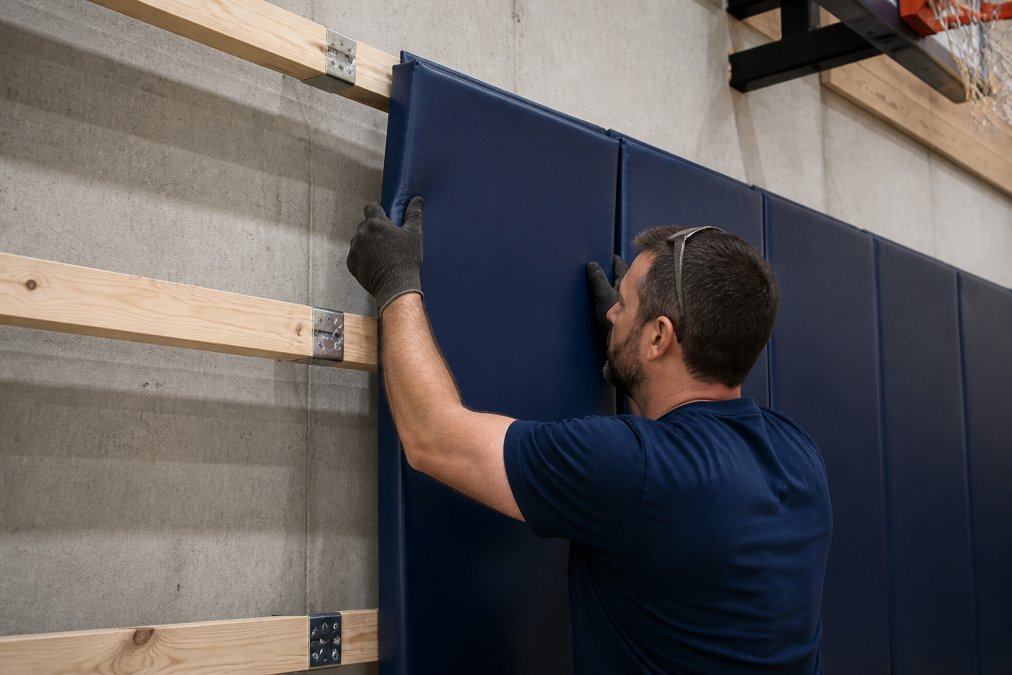
Proper installation determines whether padding delivers its full protective benefit. Furring strips create a framework that supports the padding panels and distributes impact forces evenly across the wall structure.
The furring strip method involves mounting horizontal and vertical wooden strips to the wall, then attaching padding panels to these strips. This approach creates air space behind the padding, improving shock absorption and allowing for moisture drainage. Z-clips provide an alternative fastening system that holds panels securely without visible fasteners, creating a cleaner appearance.
Installation quality affects both safety and longevity. Improperly fastened panels shift during impact, reducing shock absorption and creating safety hazards. Secure installation ensures the padding system functions as designed.
Wall-to-Wall Coverage and Mounting Hardware
Complete wall coverage eliminates gaps where athletes could contact unpadded surfaces. Wall-to-wall installation means covering all exposed wall areas from floor to ceiling, ensuring protection regardless of where impact occurs.
Mounting hardware quality affects installation durability. Heavy-duty fasteners resist loosening from vibration and impact. Corrosion-resistant hardware maintains integrity in humid gymnasium environments without rusting or deteriorating.
Proper spacing between panels prevents gaps while allowing for natural material expansion and contraction. Overlapping seams create continuous protection without creating hazardous edges or exposed foam.
Customization Options and Aesthetic Design
Custom Logo Printing and Color Selection
Facilities often want padding that reflects team colors, school branding, or facility identity. Custom logo printing allows you to incorporate graphics without compromising durability. Quality printing adheres to the vinyl surface permanently, resisting fading and peeling.
Color selection affects both aesthetics and maintenance visibility. Lighter colors show dirt and scuffs more readily. Darker colors hide wear but may absorb more heat in direct sunlight. Mid-tone colors balance visibility with practical maintenance considerations.
Durability, Maintenance, and Long-Term Performance
Cleaning Protocols and Tear Resistance
Regular cleaning maintains appearance and extends padding life. Mild soap and water remove sweat, dirt, and surface contaminants without damaging vinyl. Avoid harsh chemicals or abrasive scrubbing that could compromise the surface. Most facilities benefit from weekly spot-cleaning of high-contact areas and monthly deep cleaning of the entire padded surface.
Tear resistance comes from quality vinyl construction and proper installation.
Lifecycle Cost Analysis: Durability vs. Replacement Frequency
Facility managers often compare padding options based on upfront purchase price alone, overlooking the true cost of ownership over time. Lifecycle cost analysis, comparing initial investment against replacement frequency and maintenance burden, reveals why higher-quality padding delivers better value despite higher initial expense.
Consider these cost factors when evaluating padding:
- Material cost: Initial purchase price per square foot
- Installation labor: Professional installation typically ranges from $2-$5 per square foot depending on wall complexity and local labor rates
- Replacement frequency: How often the padding requires partial or full replacement
- Maintenance burden: Time and resources spent on repairs, cleaning, and inspections
- Facility downtime: Lost revenue or program disruption during replacement projects
- Liability exposure: Risk of injuries or insurance claims if padding degrades below safety standards
Acoustic Dampening and Soundproofing Benefits
Padding absorbs sound energy, reducing noise levels in gymnasiums. This benefit improves the environment for athletes, coaches, and spectators. High-density foam provides better acoustic dampening than thin, low-density alternatives. Sound absorption helps control noise in multi-court facilities or facilities near residential areas. The foam's structure traps sound waves, converting acoustic energy into heat rather than allowing it to reflect throughout the space.
Expected Lifespan and Warranty Considerations
Quality padding systems typically deliver 10-15 years of reliable performance in standard gymnasium environments (moderate to heavy use, typical humidity levels, regular maintenance). Facilities with exceptionally heavy use, such as professional training centers or high-school athletic complexes with year-round programming, may see somewhat shorter lifespans due to increased impact frequency.
Choosing the Right Durable Sports Padding Solution
Selecting padding requires matching specifications to facility needs, usage intensity, and budget constraints. Consider these factors:
| Factor | Impact | Consideration |
|---|---|---|
| Foam Density | Shock absorption and durability | Higher density = better protection and longevity |
| Vinyl Quality | Tear and moisture resistance | Reinforced vinyl resists punctures and water absorption |
| ASTM Compliance | Safety and liability protection | Verify impact ratings and fire-retardant certification |
| Installation Method | Performance and appearance | Furring strips vs. Z-clips affects both function and aesthetics |
| Coverage Area | Complete protection | Wall-to-wall installation prevents gap hazards |
| Customization | Facility branding | Logo printing and color selection available without sacrificing durability |
Frequently Asked Questions
What materials are best for durable sports padding in gym walls?
High-density polyurethane foam with vinyl upholstery is the standard for durable sports padding. This combination delivers impact absorption, tear resistance, and moisture protection. The foam density determines shock attenuation, higher density provides better impact protection in high-traffic areas. Vinyl covering adds durability and makes cleaning straightforward. Many facilities also choose fire-retardant options to meet safety compliance requirements.
What are ASTM safety standards for gym padding?
ASTM standards set impact absorption and safety requirements for athletic padding. Key standards include testing for shock impact, tear resistance, and flame-retardancy. These standards ensure padding protects athletes during collisions while meeting facility safety compliance. Fire-rated padding must pass flame-retardant certifications required by building codes. Checking for ASTM compliance ensures your padding meets recognized safety benchmarks for gymnasium equipment.
How do you install gym wall padding correctly?
Proper installation uses furring strips or Z-clip systems to secure padding to walls. Furring strips create a frame that holds padding in place; Z-clips offer a cleaner look and easier removal. Wall-to-wall coverage prevents gaps where athletes could strike unpadded surfaces. Mounting hardware must be rated for the weight and impact load. Professional installation ensures even coverage and secure fastening, reducing safety risks in high-traffic athletic facilities.
How long does durable gym wall padding last?
Quality sports padding can offer a long lifespan depending on usage intensity, material quality, and maintenance. High-density foam resists compression better than standard foam. Vinyl upholstery protects against tears and moisture damage. Regular cleaning extends lifespan by preventing dirt buildup and degradation. In high-impact areas, padding may wear faster and require replacement sooner. Durability testing ensures padding meets performance standards throughout its lifecycle.


Leave a comment
This site is protected by hCaptcha and the hCaptcha Privacy Policy and Terms of Service apply.