


Table of Contents
- Pickleball Equipment That Raises the Level of Play
- Pickleball Paddle Materials and Grip Size Explained
- A Practical Pickleball Net Buying Guide
- Choosing a Pickleball Court System for Facilities
- Balls, Shoes, and Accessories That Support Performance
- Pickleball Equipment Maintenance for Long-Term Durability
- Building a Budget Around Total Cost of Ownership
- Frequently Asked Questions
Last Updated: October 13, 2026
Pickleball Equipment That Raises the Level of Play
Pickleball equipment is the sum of the paddle, ball, net, court surface, and footwear a player or facility uses. Sports Vista USA supplies paddles, nets, court systems, and accessories for homes, schools, parks, and clubs. The paddle is the most personal choice, but net height and court surface set the conditions every shot is played under.
Pickleball Paddle Materials and Grip Size Explained
Paddle choice comes down to four variables: core thickness, face material, grip circumference, and weight.
Core Thickness, Face Materials, and What They Change
Core thickness governs the trade-off between power and control. A 16mm core gives a softer, slower response with more dwell time, suiting control-focused players; thinner cores feel livelier and send the ball out faster.
The Warping Point Ascent line splits this cleanly. The Warping Point Ascent Pickleball Paddle - Control is the green 16mm control option, and the Warping Point Ascent Pickleball Paddle - Power is the red 16mm power model.


Face materials are the other half of the equation. Composite and carbon faces are common, and surface texture generates spin: a textured face grips the ball on contact, a smooth face does not.
Grip Size and Overgrip: The Fit That Prevents Hand Fatigue
Grip size is measured as circumference, and the right fit is where your fingers wrap without your fingertips digging into your palm.
The simplest field test: hold the paddle, and if you can slide your index finger comfortably between your fingertips and your palm, the grip is close. No gap means size up; room for two fingers means size down.
A Practical Pickleball Net Buying Guide
A pickleball net buying guide starts with one question: does this net need to come down? If yes, buy portable; if no, buy permanent.

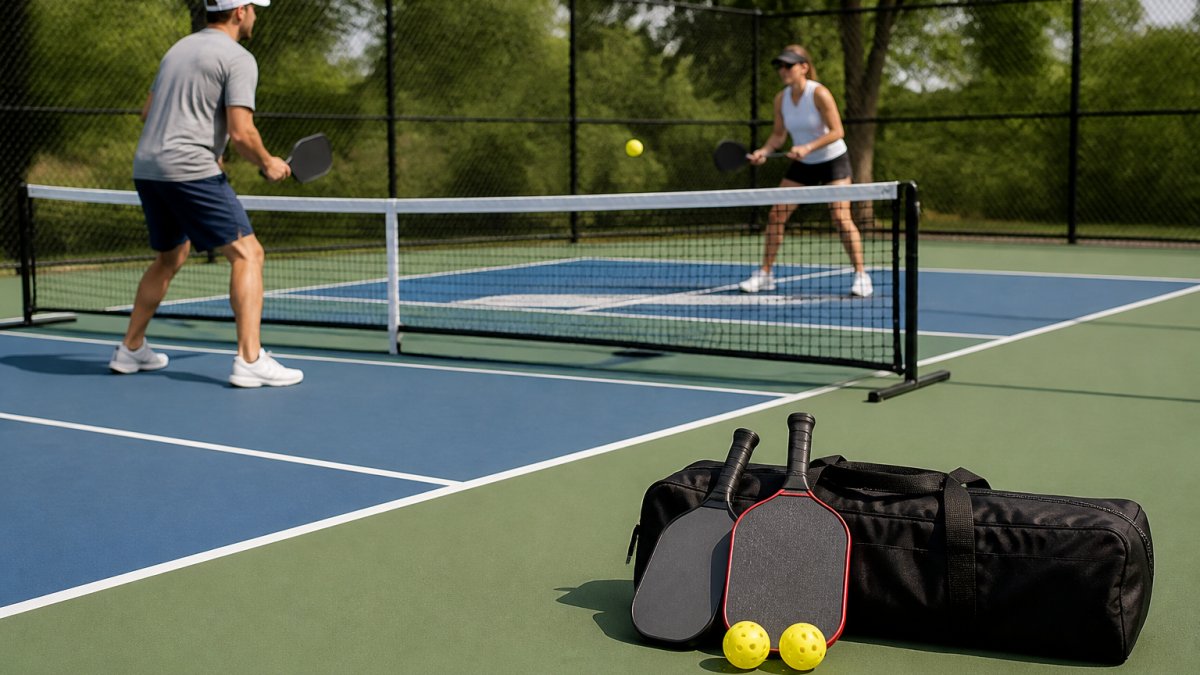
Portable nets suit driveways, parks, gyms, and shared spaces where the court has to be cleared. The Srikel FlashCourt Pickleball Net 3.0 is a full-width portable option at $199.00: 36 in. high by 22 ft. wide, collapsible powder-coated steel frame with a push-button system, approximately 24.8 lbs. assembled, setup in about 60 seconds with no tools, and a 600D polyester carry bag.
Permanent nets suit facilities that want a fixed, regulation-ready court. The Dominator Heavy-Duty In-Ground Pickleball System - Square Posts is built for that job at $699.00: 6061 T6 aluminum with stainless-steel hardware, heavy-duty 5/32-inch post walls, removable in-ground sleeves set in concrete, and an included 21 ft. 9 in. net that meets USA Pickleball regulation standards.
| Net Type | Best For | Setup | Portability |
|---|---|---|---|
| Portable (FlashCourt 3.0) | Driveways, parks, shared gyms | About 60 seconds, no tools | Carry bag included |
| In-ground (Dominator) | Schools, clubs, dedicated courts | Permanent sleeve installation | Posts removable |
Choosing a Pickleball Court System for Facilities
Facility buyers should plan the court system around who plays on it, how long it must last, and how it gets maintained, starting with the layout rather than the net.
Start With Court Dimensions and Layout
A regulation pickleball court is 20 ft. wide by 44 ft. long, divided by a net at 36 in. at the sidelines and 34 in. at the center. The non-volley zone, or kitchen, extends 7 ft. back from the net on both sides, indoors and outdoors. For multi-court planning, run-off and buffer space matter most: players chase balls and step backward on lobs, so courts placed edge-to-edge create collisions and shorten rallies.
Surface Options and What Each One Demands
Asphalt and concrete are the common outdoor bases, and both need to be level and drained before anything is installed. An uneven slab telegraphs through the surface and changes ball bounce, and no net system compensates for that.
Acrylic surfacing over asphalt or concrete is the standard outdoor playing surface, tinted and textured for consistent ball response. Modular tile and interlocking sport surfaces suit gyms and multi-use spaces and install over an existing hard floor without resurfacing.
Permanent, Semi-Permanent, and Portable Net Systems
Permanent in-ground systems give the most stable net tension and the cleanest court. The Dominator Heavy-Duty In-Ground Pickleball System - Square Posts uses 6061 T6 aluminum with stainless-steel hardware, heavy-duty 5/32-inch post walls, and removable in-ground sleeves set in concrete. The included net is 21 ft. 9 in. wide, and the system meets USA Pickleball regulation standards.
Semi-permanent and portable systems give flexibility if the space doubles as a parking lot, multi-sport area, or shared gym. The Srikel FlashCourt Pickleball Net 3.0 measures 36 in. high by 22 ft. wide, uses a collapsible powder-coated steel frame with a push-button system, weighs approximately 24.8 lbs. assembled, sets up in about 60 seconds with no tools, and ships with a 600D polyester carry bag.
| System Type | Best For | Post/Frame | Net Width | Portability |
|---|---|---|---|---|
| In-ground (Dominator) | Dedicated outdoor courts, schools, clubs | 6061 T6 aluminum, 5/32-in. walls, stainless hardware | 21 ft. 9 in. | Posts removable from sleeves |
| Portable (FlashCourt 3.0) | Driveways, shared gyms, multi-use spaces | Powder-coated steel, push-button frame | 22 ft. | Carry bag included |
Drainage, Weather, and Outdoor Durability
For outdoor courts, weather drives the material spec. Rust-proof aluminum and stainless-steel hardware are worth the difference on a court that stays outside year-round.
Wind is the other outdoor variable. A portable net that is fine in a driveway can tip or walk in an exposed park, so facilities that leave nets up outdoors should favor in-ground or weighted systems.
Accessibility and Safety Planning
Accessibility belongs in the plan from the start, because court access routes, seating, and safety padding are easier to design in than to retrofit. A paved path from parking or a building entrance to the court edge, seating with backs at a comfortable height, and clear space at the net posts reduce barriers for players with limited mobility. Safety padding on posts and nearby hard edges protects players who chase balls outside the court lines.
Procurement Notes for Clubs, Schools, and Parks
Facility purchases usually move through a quote, a purchase order, and a delivery schedule rather than a single online checkout. Two steps make that smoother: confirm the total footprint, surface type, and net system before requesting pricing, then buy the net system, padding, seating, and lighting as one coordinated project.
Sports Vista USA stocks portable and permanent net systems and court accessories so a facility can assemble a complete setup rather than piecing one together.
Balls, Shoes, and Accessories That Support Performance
Balls, shoes, and small accessories are where performance for pickleball players, clubs, and facilities quietly gets won or lost.
Warping Point Ascent Pickleball Paddle - Power →
Ball selection is mostly about environment.
Footwear is the bigger purchase.
Sweat-wicking performance socks reduce friction, and friction causes blisters, a cheap fix with a real payoff for anyone playing multiple sessions a week.
Accessories worth carrying:
- Protective eyewear for play near the kitchen line
- A hand towel for grip and face during long sessions
- A paddle band or cover to protect the face between games
For players tuning an existing paddle, Pickleball Effect Tungsten Weighted Tape at $28.00 adds mass without lead.
Pickleball Equipment Maintenance for Long-Term Durability
Pickleball equipment maintenance is mostly three habits: keep gear dry, store it protected, and inspect wear points before they fail.
Paddles: store them in a cover or dedicated pocket, not loose in a bag, and keep them out of a hot car.
Nets: dry portable nets before storage, particularly the frame and bag, since standing water defeats powder-coated steel over time.
Court surfaces: keep debris off the playing area, and address cracks or drainage problems early.
Building a Budget Around Total Cost of Ownership
Total cost of ownership is the number that matters, not the sticker price. A cheaper net that needs replacing every couple of seasons costs more than a permanent system that outlasts it. Compare options in three buckets: purchase, upkeep, and replacement cycle.
The Three Cost Buckets
Purchase cost is the visible number: the paddle, net, posts, surface, and accessories. Upkeep cost keeps the gear playable: overgrips, replacement balls, net tension adjustments, surface cleaning, and small repairs. Replacement cost is what you spend when a component reaches the end of its life, the bucket most buyers ignore. A portable net stored wet and left outdoors may need replacing far sooner than a maintained in-ground system: the in-ground system costs more up front and less over time, while the portable net costs less up front and more over time if used hard.
Budget Tiers by Buyer
Think in tiers:
- Entry tier: a portable net and a recreational paddle, best for households testing whether pickleball sticks. Upkeep is minimal and replacement is easy.
- Player tier: a fitted paddle, proper court shoes, and a portable net you can take to a park, best for regular recreational play. The paddle and shoes wear out first, so budget for replacing them on a predictable cycle.
- Facility tier: in-ground net systems, permanent posts, safety padding, seating, and lighting, best for schools, parks, and clubs running scheduled play. The purchase is larger, but the per-year cost drops because the system is designed to stay in place and be maintained rather than replaced.
| Tier | Typical Buyer | Core Items | Where the Money Goes Over Time |
|---|---|---|---|
| Entry | New households | Portable net, recreational paddle | Balls, overgrips, occasional net replacement |
| Player | Regular recreational players | Fitted paddle, court shoes, portable net | Paddle and shoe replacement, overgrips, balls |
| Facility | Schools, parks, clubs | In-ground net system, padding, seating, lighting | Surface upkeep, net tension checks, small repairs |
How to Sequence Spending
The facility tier is where planning pays. Buying the net system, padding, and lighting as one coordinated project avoids the mismatch that happens when components are purchased separately over time.
For individual players, the sequence is different. Buy the paddle that fits your hand and your game, then the shoes, then the accessories. Upgrading the paddle a second time before fixing footwear is a common way recreational players spend more and play worse.
A Simple Ownership Checklist
- Track when each item was purchased so you know when it is due for replacement.
- Keep overgrips, balls, and small parts on hand so a worn item does not sideline a session.
- Dry portable nets before storage and check in-ground net tension periodically.
For anyone searching for pickleball equipment near me in southern Illinois, the practical advice is the same: buy the tier that matches how often you actually play, and upgrade the court before upgrading the paddle a second time. Sports Vista USA stocks paddles, portable and permanent net systems, and court accessories so a buyer can assemble a complete setup rather than piecing one together.
Frequently Asked Questions
How do I choose a pickleball paddle for my skill level?
Start with how you want the ball to behave off the face. The Warping Point Ascent line splits that decision in two: the Ascent Power is the power-focused 16mm option, and the Ascent Control is the control-focused 16mm option. Both sell for $59.99, so a developing player can pick based on play style rather than budget. If you are unsure, buy the control model first and add tungsten weighted tape later to fine-tune swing weight, stability, and balance without replacing the paddle.
What is the difference between a portable and permanent pickleball net?
Portable nets move. The Srikel FlashCourt Net 3.0 is a full-width net measuring 36 inches high by 22 feet wide, sets up in about 60 seconds with no tools, weighs roughly 24.8 lbs. assembled, and includes a 600D polyester carry bag. Permanent systems stay put: the Dominator Heavy-Duty In-Ground system uses 6061 T6 aluminum square posts set in concrete sleeves, with a 21 ft. 9 in. regulation net and an internal crank for tension. Choose portable for driveways and shared gyms, permanent for dedicated courts.
What equipment does a pickleball court need?
A playable court needs a net system, a marked surface, and balls, plus safety and comfort items for players. For a permanent installation, the Dominator Heavy-Duty In-Ground Pickleball System includes two square posts, a regulation net, two in-ground sleeves, lacing rods, and an internal crank system, and it meets USA Pickleball regulation standards. For shared or temporary spaces, a portable net like the Srikel FlashCourt covers the net requirement without any concrete work.
How should pickleball paddles and nets be maintained?
Wipe paddle faces after play to keep grit and debris out of the surface, store paddles away from heat and direct sun, and keep the factory grip intact if you may still return the paddle under the supplier's 30-day trial. For nets, check tension before each session, since the Dominator system uses an adjustable internal crank and the Srikel frame relies on a reinforced center support to reduce sagging. Store portable nets dry and protected; the Srikel frame is powder-coated steel and the net is 18-ply polyethylene.
How do clubs choose pickleball equipment for frequent use?
Clubs should buy around session volume, not individual preference. Paddles that share one core thickness simplify loaner programs, so a club can stock both the Ascent Power and Ascent Control at $59.99 each and let players choose by feel. Nets should be rated for repeated setup and takedown or installed permanently, and accessories like tungsten weighted tape let members adjust a shared paddle instead of buying new ones.
What should a facility consider when choosing a pickleball court system?
Facilities should weigh post material, hardware, and whether the system can be removed. The Dominator Heavy-Duty In-Ground Pickleball System uses completely rust-proof 6061 T6 aluminum with stainless-steel hardware and 5/32-inch post walls, and its posts install into sleeves set permanently in concrete so they can be pulled when the court is not in use. Confirm net width and post height before permanent installation, and review the manufacturer's installation instructions carefully.
Pickleball rewards players who match their gear to their court instead of chasing the newest paddle. The hard part is assembling a setup where the net, surface, and equipment actually agree with each other. Sports Vista USA carries paddles, portable and in-ground net systems, court accessories, and the facility essentials that complete a playing environment, so you can build the whole setup in one place. Get started with Sports Vista USA and put together a court that plays the way it should.


Leave a comment
This site is protected by hCaptcha and the hCaptcha Privacy Policy and Terms of Service apply.