

Table of Contents
- What You Actually Need to Start Playing Pickleball
- How to Choose Your First Pickleball Paddle
- The Best Pickleball Paddle for Beginners in 2026
- Indoor vs. Outdoor Pickleball Balls: What's the Difference?
- Why Court Shoes Matter More Than You Think
- Pickleball Court Equipment for Schools and Community Centers
- Budget-Friendly Gear and Starter Kits
- Extend the Life of Your Pickleball Gear
- Frequently Asked Questions
Last Updated: September 6, 2026
What You Actually Need to Start Playing Pickleball
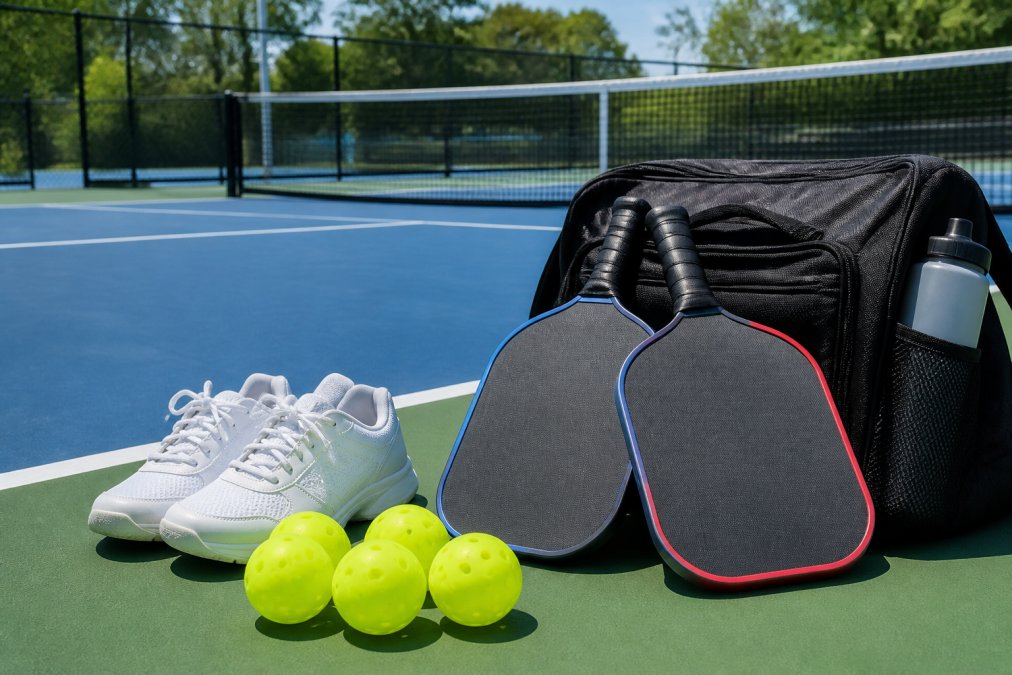
Pickleball gear for beginners boils down to four items: a paddle, balls, court shoes, and a basic bag. This guide from Sports Vista USA breaks down what to buy first, what to skip, and how to choose gear that fits your skill level.
The sport's appeal is its low barrier to entry. However, buying the wrong paddle or using mismatched balls can frustrate new players.
Below, we walk through paddles, balls, footwear, and court equipment. We also cover how to keep your gear performing, which matters more than most beginners expect. If you are starting in Carbondale, the local courts at Carbondale Park District facilities are a great place to test your new setup.
How to Choose Your First Pickleball Paddle
The paddle is the most personal piece of equipment you will own. A good starter paddle balances control and power while forgiving mishits. Most beginners over-prioritize power, which leads to inconsistent shots.
Paddle Weight: Match It to Your Play Style
Paddle weight directly affects swing speed, control, and arm fatigue. The standard range is 7.3 to 8.4 ounces.
- Under 7.5 oz (lightweight): Best for players who rely on quick hands at the kitchen line, or those with existing wrist or elbow sensitivity. The trade-off is less mass behind the ball, so you will need to generate your own power on deeper shots.
- 7.5 to 8.2 oz (midweight): The sweet spot for most beginners. You get enough mass for stable blocks and moderate power, while still being maneuverable enough for reaction volleys. If you are unsure, start here.
- Over 8.2 oz (heavyweight): Adds power and stability on off-center hits, but demands more shoulder and arm strength over a two-hour session. Heavier paddles also slow down your hand speed at the net, which can be a disadvantage in fast exchanges.
New players often buy a lightweight paddle thinking it will be easier to control, then find themselves getting pushed around by faster shots. If you are an adult of average strength, a midweight paddle gives you the best platform to develop proper technique.
Grip Size: Use the Index-Finger Test
Grip circumference determines how comfortably you hold the paddle and how much wrist snap you can generate. A grip that is too small forces you to squeeze tighter, straining the forearm; a grip that is too large restricts wrist action.
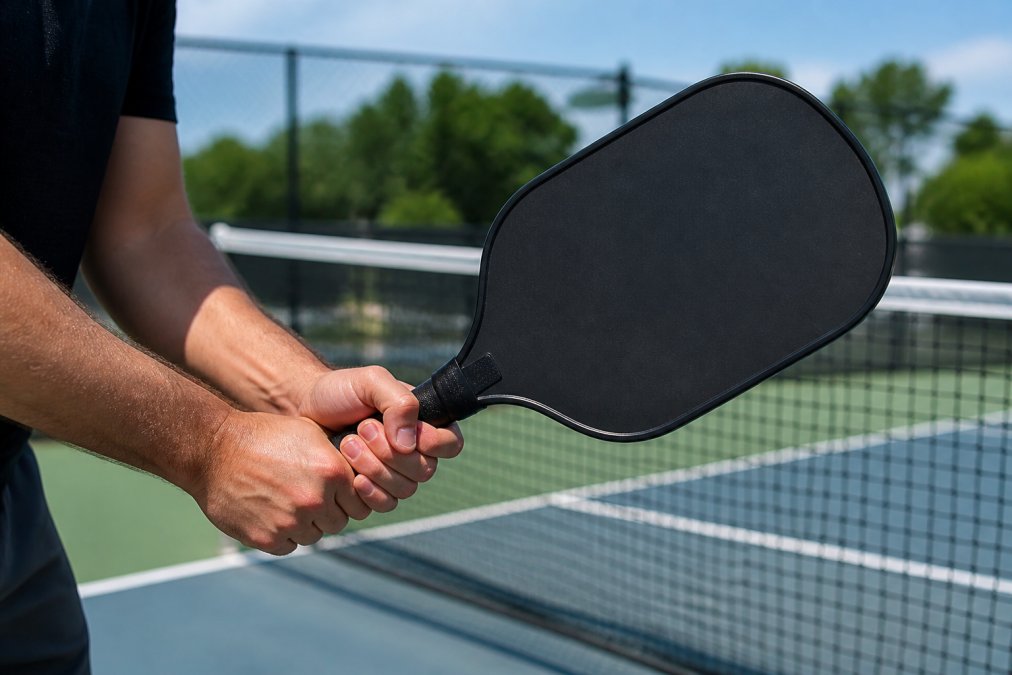
The standard sizing method is the index-finger test. Hold the paddle with a relaxed continental grip and slide your other index finger into the gap between your fingertips and palm. If it fits snugly, the grip is correct. If it slides in easily, the grip is too large. If you cannot fit the finger, the grip is too small.
Most starter paddles come in a standard 4-1/4 inch grip. Players with smaller hands typically prefer a 4-inch grip. If you are between sizes, choose the smaller grip and add an overgrip.
Core Materials: Polymer vs. Other Options
The paddle core absorbs energy and dictates the feel at contact. Three core types dominate the market:
- Polymer honeycomb: The most common choice for beginners. It offers a soft, forgiving feel with good shock absorption. The trade-off is slightly less pop compared to other cores, which actually helps beginners develop controlled shots.
- Nomex honeycomb: A firmer, louder core that generates more power. It transmits more vibration to the arm, which can be uncomfortable for new players or those with joint sensitivity. Nomex is rare in modern starter paddles for this reason.
- Aluminum honeycomb: Sits between polymer and Nomex in firmness. It offers decent power and a crisp feel, but it is heavier and less common in current models.
For a beginner, polymer is the clear recommendation. Its soft feel masks mishits and reduces the sting on off-center contact.
Surface Materials: Graphite vs. Carbon Fiber vs. Fiberglass
The paddle face determines spin potential, durability, and how the ball leaves the surface.
- Graphite: Lightweight and smooth, offering a crisp, consistent feel. It provides moderate spin and is the most common face on budget and mid-tier paddles. Graphite is a solid starting point, though it can be slicker than other materials when you start experimenting with heavy topspin.
- Raw carbon fiber (T700 or similar): A textured, rough surface that grips the ball for significantly more spin. Carbon fiber is the current standard on premium paddles, and it is increasingly appearing on value-priced models. The texture also provides a slightly softer, more muted feel at contact.
- Fiberglass: A middle-ground option that offers more power than graphite but less spin than carbon fiber. It has a slightly softer feel and is common on budget paddles.
For beginners, the choice between graphite and carbon fiber comes down to your trajectory. If you want a paddle that will still feel capable as you develop spin, start with carbon fiber. If you are on a tight budget, graphite will serve you fine.
The Edge Guard and Handle Length
The edge guard protects the paddle from ground scrapes, which happen often when you reach for low balls. A wider edge guard offers more protection but adds weight and reduces the effective hitting area. A thin edge guard maximizes the sweet spot but leaves the paddle more vulnerable.
Handle length is another factor beginners overlook. Standard handles are around 5 inches, which suits most two-handed backhands. Longer handles give extra leverage but shift the balance point toward the handle; if you grew up playing tennis with a two-handed backhand, look for a longer handle.
A good starter paddle balances all these factors without pushing the price up. The Grasp Pickleball Paddle - 16mm combines a 16mm polymer core with a raw T700 carbon-fiber surface, giving you the forgiveness of polymer and the spin potential of carbon fiber in one package.

The Best Pickleball Paddle for Beginners in 2026
For most new players, the Grasp Pickleball Paddle - 16mm is the best pickleball paddle for beginners in 2026. Its 16mm honeycomb core is designed for forgiveness and shock absorption, and the raw T700 carbon-fiber surface provides grip for spin as your technique improves.
That said, your play style should guide the final call. Players who want a controlled, placement-based game will find the Warping Point Ascent Pickleball Paddle - Control a strong fit. If you prefer attacking the ball, the Warping Point Ascent Pickleball Paddle - Power is the power-oriented counterpart.


| Paddle | Core | Focus | Best For |
|---|---|---|---|
| Grasp 16mm | 16mm honeycomb | Balance | Most beginners |
| Ascent Control | 16mm profile | Placement | Accuracy-focused players |
| Ascent Power | 16mm profile | Power | Aggressive hitters |
Each of these options is priced at $59.99.
Indoor vs. Outdoor Pickleball Balls: What's the Difference?
Pickleball balls are not interchangeable. Indoor balls have larger holes and softer plastic, making them slower and easier to control on smooth gym floors. Outdoor balls have smaller holes and harder plastic, built to withstand rougher court surfaces and wind.
The hole pattern is the easiest way to tell them apart. Outdoor balls have 40 smaller holes, while indoor balls have 26 larger holes. Outdoor balls are also heavier, which helps them cut through breezes.
How Carbondale's Courts and Climate Change the Ball Choice
Most national guides stop at the indoor/outdoor distinction. But in Carbondale, the specific court surfaces and seasonal weather make ball selection more nuanced.
Court surface matters more than the label. The outdoor courts at Carbondale Park District facilities are primarily asphalt, which is more abrasive than the acrylic-coated hard courts common in warmer states. On rough asphalt, outdoor balls wear faster. The ball's surface becomes fuzzy and then slick, reducing grip and causing erratic bounces. If you play primarily on asphalt, expect to replace your outdoor balls more frequently.
Humidity affects ball hardness. High humidity can soften the plastic of outdoor balls, making them play slower and feel "dead." Cold, dry air can make balls harder and more brittle, so they can crack on impact. If you play through the winter, keep a fresh set of balls in your bag and warm them up before play.
Indoor options in Carbondale are limited but specific. The primary indoor spaces are school gyms and community center multipurpose rooms with polished wood or synthetic tile floors. These surfaces are slicker than outdoor courts, so indoor balls with their softer plastic and larger holes are designed to grip and slow down appropriately. Using outdoor balls on a wood floor creates a fast, skidding bounce that is difficult to control.
A Local Rule of Thumb
- Play at a public park or outdoor court in Carbondale: Use outdoor balls. Buy a fresh set at the start of the season and inspect them monthly for cracks and surface wear.
- Play at a school gym or community center: Use indoor balls. They will last longer on smooth floors, but they can deform if left in a hot car during summer.
- Play both: Keep separate sets. Mixing indoor and outdoor balls in the same bag leads to grabbing the wrong one at the court.
What to Look for in a Beginner Ball
For outdoor play, look for balls with a consistent seam. Seamless balls can be more durable and fly truer than seamed balls. For indoor play, prioritize softer plastic that will not skid on wood floors.
A common beginner mistake is buying the cheapest balls available, which often have inconsistent weight and bounce. A mid-priced ball from a recognizable brand may play more predictably and last longer. For outdoor play, consider buying a 3-pack or 6-pack of outdoor balls at the start of the season.
Why Court Shoes Matter More Than You Think
Court shoes are the most overlooked piece of pickleball gear for beginners. Running shoes are not designed for the lateral movements pickleball demands. Court shoes can provide lateral support, stabilizing your ankles during side-to-side lunges and quick direction changes.
Look for non-marking soles, which protect gym floors, and adequate traction for hard courts. Cushioning matters too. Breathability also helps keep your feet comfortable.
A common mistake is wearing worn-out shoes. The tread on court shoes can wear down. If you notice slipping during lateral movements, replace your shoes.
Pickleball Court Equipment for Schools and Community Centers
Schools and community centers in Carbondale have specific needs when it comes to pickleball court equipment. Unlike a home setup, these facilities require equipment that is durable, safe, and easy to manage.
Portable net systems are the standard choice for multi-use facilities, allowing a gym or parking lot to convert to pickleball quickly and then revert to other uses. Look for nets with sturdy posts and a tension system that keeps the net at the regulation 34-inch center height.
For facilities, Sports Vista USA supplies pickleball nets, portable and permanent net systems, and court accessories. Permanent net systems are an option for dedicated courts, offering a more professional setup that is always ready for play.
Budget-Friendly Gear and Starter Kits
Starting pickleball does not require a large upfront investment. The key is to prioritize the items that impact your play the most and skip the extras until you know you will stick with the sport.
A sensible approach is to start with a mid-priced paddle, a set of balls, and a basic bag. The paddles mentioned earlier, all at $59.99, represent a strong value point.
For carrying your gear, the Pickleball Sling Bag - Black is a compact option that holds 2 to 4 paddles, balls, water, and essentials. If you carry more gear or play frequently, the FORWRD Court Caddy Pickleball Bag offers a modular structure designed to keep your equipment organized and protected.
Extend the Life of Your Pickleball Gear
Maintenance and longevity of gear are topics most beginner guides skip, but they matter for your wallet. A quality paddle can last with proper care. Surface wear can affect paddle longevity and the texture that generates spin.
Use the edge guard to your advantage. It is designed to absorb ground contact. Also, store your paddle away from extreme heat, as a paddle left in a hot car can warp. Keep your paddle in a bag when not in use to protect it from scratches and temperature swings.
Balls wear out faster than paddles. Outdoor balls become rough and may crack after repeated play on abrasive surfaces. Inspect your balls before each session and discard any with cracks. Indoor balls are softer and can deform over time.
The climate in southern Illinois means hot, humid summers. Bringing your paddle and balls inside after play can extend their usable life. For community programs, establishing a storage routine for nets and portable equipment also prevents damage and loss.
Starting with the right pickleball gear fundamentals can contribute to a more enjoyable introduction to the sport. Focus on a paddle that balances control and power, use the correct balls for your court surface, and invest in proper court shoes.
Frequently Asked Questions
What is a good beginner pickleball set?
A good beginner set includes a paddle, balls, and a bag or carrying case. Look for a paddle that is lightweight, has a larger sweet spot, and offers a balance of control and power, like the Warping Point Grasp 16mm. Include a few outdoor balls with larger holes and a simple bag to carry your gear. You can also add essentials like an overgrip and a water bottle. Focus on a set that lets you play comfortably without a major upfront investment.
What should a beginner look for in a pickleball paddle?
Beginners should prioritize control and forgiveness over raw power. A paddle with a 16mm honeycomb core, like the Warping Point Ascent Control, offers a softer feel and a larger sweet spot, reducing mishits. Choose a mid-weight paddle between 7.5 and 8.4 ounces to balance power and maneuverability. A comfortable grip size is also vital; you should be able to hold the paddle without your fingers digging into your palm. A graphite or carbon-fiber surface helps with spin as you develop your game.
Do I need specific shoes for pickleball?
Yes, court-specific shoes are important for pickleball. They provide lateral support for side-to-side movements and have non-marking soles that protect gym floors and outdoor courts. Running shoes lack this stability and can lead to ankle injuries. Court shoes also offer better traction and cushioning for the stop-and-start nature of the game. While you can start with a pair of general tennis shoes, investing in court shoes can make play more comfortable.
How do I choose the right pickleball ball for my skill level?
For beginners, the choice is more about where you play than your skill level. Outdoor balls are harder, heavier, and have smaller holes to resist wind. Indoor balls are softer, lighter, and have larger holes, making them slower and easier to control. If you play outdoors, choose a ball rated for outdoor use. If you play indoors, choose an indoor ball. As you improve, you may develop preferences for specific brands, but starting with the correct type for your court is the key.
How do I know if a pickleball paddle is good quality?
A good quality paddle is defined by its materials and construction. Look for a paddle with a composite face (graphite or carbon fiber) and a thick honeycomb core (16mm is common) for better control and a larger sweet spot. Check for a durable edge guard to protect the paddle from ground hits. A thermoformed unibody construction, like in the Warping Point Grasp, indicates a more solid, durable paddle. These features typically result in a paddle that performs consistently and lasts longer.
What pickleball court equipment do schools need to get started?
Schools and community centers need durable, adaptable equipment. This includes portable pickleball net systems that can be set up on existing courts, a set of quality paddles for physical education classes or after-school programs, and a supply of balls appropriate for indoor or outdoor play. Consider a storage cart or bag to keep equipment organized. For permanent installations, look into fixed net posts and court line marking kits to convert gymnasium or multi-purpose floors for dedicated pickleball play.
Choosing your first pickleball gear does not have to be complicated, but it does require matching equipment to your playing style and local conditions. Sports Vista USA offers a growing selection of paddles, nets, and court accessories for players in Carbondale and across Illinois. Browse the pickleball collection to find dependable equipment built for serious play and get started with the right setup for your game.


Leave a comment
This site is protected by hCaptcha and the hCaptcha Privacy Policy and Terms of Service apply.