

Table of Contents
- What Counts as Professional Sports Gear?
- How Professional Sports Gear Improves Athletic Performance
- The Safety Benefits of High-Quality Equipment
- Durability and Long-Term Cost-Effectiveness
- In-Ground vs Portable Basketball Hoop Comparison
- Best Practices for Maintaining Basketball Court Systems
- Training Tools That Build Professional-Level Skills
- Conclusion: Make the Investment That Matches Your Goals
- Frequently Asked Questions
Last Updated: September 8, 2026
What Counts as Professional Sports Gear?
Professional sports gear is equipment engineered to meet the demands of competitive play, built with higher-grade materials and stricter quality standards than recreational alternatives. The difference shows up in the details: reinforced welds on basketball hoops, precision-balanced rims, and backboards that meet official size specifications. For athletes in Carbondale and across Illinois, the choice often comes down to how seriously you train and how long you expect the gear to last.
The gap is not about branding. It is about measurable differences in material science, construction methods, and performance testing. A professional-grade basketball system uses thicker steel, heavier gauge poles, and components rated for repeated high-impact use, the same reasons schools, parks, and recreation departments choose commercial systems over residential models.
When you shop, look beyond marketing claims. Check the specifications: backboard thickness, rim spring mechanisms, pole diameter, and padding quality. Professional sports gear is defined by these verifiable attributes, not by price tags or logos.
How Professional Sports Gear Improves Athletic Performance
The link between gear and performance is about measurable biomechanics and material science. Professional-grade equipment is engineered to reduce energy waste, optimize force transfer, and provide consistent feedback that trains your nervous system correctly.
Shooting Mechanics and Rim Response
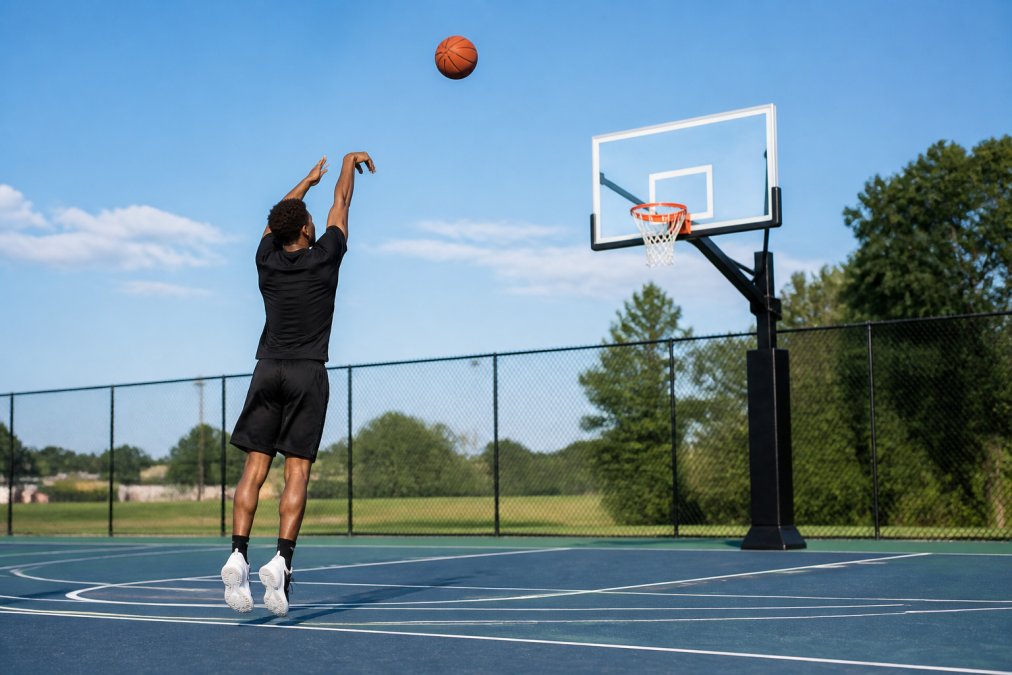
A regulation rim is 18 inches in diameter and mounted exactly 10 feet high. When you practice on a system that meets these specs, your muscle memory develops correctly. Professional rims use spring-loaded mechanisms that absorb impact and return energy predictably. A cheap, rigid rim causes erratic bounces, forcing you to subconsciously adjust your shot, a habit that destroys consistency.
Backboard Rebound Consistency
A regulation backboard is 72 inches wide and 42 inches tall. Professional backboards, whether acrylic or tempered glass, are manufactured to strict flatness and thickness tolerances. A warped or thin backboard creates dead spots or unpredictable rebounds, training you to react to bad bounces rather than developing reliable technique. Tempered glass offers the most consistent rebound because it doesn't flex on impact.
Training Aids That Encode Proper Mechanics
Repetition alone doesn't build skill, correct repetition does. The Hoopsbasket Shooting Correction Machine uses a reversible elbow brace to lock the shooting arm into correct alignment. Its adjustable resistance forces muscles to fire in the proper sequence, building muscle memory for a repeatable motion.

The HoopsKing Big Shot 33" Training Basketball is 3.5 inches larger in circumference than a regulation ball. To shoot it accurately, you must increase your shot arc. When you switch back to a regulation ball, your natural arc is higher, improving your chances of making a shot because the ball drops through the rim with more vertical clearance.

The HoopsKing Weighted Indoor Basketball adds resistance to every dribble and pass, building forearm and wrist strength for a firmer handle and quicker release. These tools don't just make the game harder, they force your body to adapt to a more efficient movement pattern.

The Confidence Feedback Loop
Athlete confidence grows when equipment performs predictably. A backboard that rebounds true, a rim that responds consistently, and a pole that does not wobble remove variables from your training. That psychological advantage compounds over hundreds of repetitions, which is why competitive players insist on professional-grade setups even for home practice.
The Safety Benefits of High-Quality Equipment
Injury prevention starts with equipment that meets established safety standards. Professional sports gear undergoes more rigorous testing for impact protection, joint stability, and structural integrity than recreational products. For basketball systems, this means padding that absorbs collision forces, rims that release under excessive pressure, and bases or anchoring systems designed to prevent tipping.
Schools and recreation facilities in Illinois must consider liability alongside performance, which is why institutional-grade goals are built to more demanding specifications. Portable hoops need weighted bases that stay put during aggressive play. In-ground systems require proper anchoring to withstand dunks and hanging on the rim.
Ergonomics also play a role in safety. Gear that fits properly reduces strain on joints and muscles, from the grip texture on a training basketball to the height adjustability of a hoop system serving players of different ages and skill levels. Comfort optimization is a component of safe, sustainable training.
Durability and Long-Term Cost-Effectiveness
Professional sports gear is designed for wear and tear that would destroy recreational equipment within a season. The initial investment is higher, but total cost of ownership over five or ten years typically favors professional-grade equipment, especially for outdoor installations in Carbondale, Illinois.
The Carbondale Climate Factor
Southern Illinois experiences full seasonal extremes. Summer heat and UV radiation degrade cheap plastics and fade powder coatings. Winter freeze-thaw cycles crack concrete bases and stress metal components. High humidity and rain accelerate rust on non-galvanized parts. A consumer-grade hoop might survive a few seasons in a mild climate, but in Carbondale, it will likely fail within two to three years.
Material Specifications That Matter
When comparing systems, look for specific material grades, not just marketing language:
- Steel Gauge: Professional in-ground systems use heavier-gauge steel (typically 11-gauge or thicker) for the pole and support arms. Thinner steel flexes under the weight of a dunk, leading to bent rims and misaligned backboards.
- Powder Coating: A high-quality powder coat is more than paint. It's a baked-on finish that resists chipping, fading, and corrosion. Check for a warranty that covers the finish against fading.
- Hardware: Look for zinc-plated or stainless steel bolts and fasteners. Standard hardware will rust and seize, making adjustments and repairs difficult.
- Backboard Material: Tempered glass offers the best performance and longevity. Acrylic is lighter and less expensive but can yellow and become brittle over time with UV exposure. Polycarbonate is virtually unbreakable but can scratch and lose its clarity.
The Hidden Costs of Cheap Equipment
For organizations managing multiple facilities, the cost of a cheap system isn't just its purchase price. It includes:
- Replacement frequency: A $300 portable hoop that needs replacing every two years costs more over a decade than a $1,500 in-ground system that lasts 15 years.
- Labor and downtime: Replacing a broken hoop requires staff time, and the court is out of commission while waiting for the replacement.
- Injury risk: A failing rim or unstable base is a liability risk that can lead to medical costs and legal issues.
Maintenance as a Cost-Saving Strategy
To maximize the lifespan of your investment, a proactive maintenance routine is essential.
- Seasonal Inspection: At the start of each season, inspect all bolts and welds. Tighten anything loose. Look for rust, especially where metal meets concrete.
- Cleaning: Wash the backboard and pole with mild soap and water. Avoid harsh chemicals that can strip the powder coating. For acrylic backboards, use a non-abrasive cleaner to prevent scratching.
- Moving Parts: On adjustable-height systems, lubricate the sliding mechanism and crank with a silicone-based lubricant to prevent seizing.
- Base Maintenance: For portable hoops, check the base for cracks. If it's filled with sand or water, ensure it's topped off to the recommended weight. For in-ground systems, inspect the concrete anchor for cracks that could compromise stability.
- Net and Rim Care: Replace worn nets promptly. A frayed net can catch a player's hand. Check the rim's spring mechanism for proper tension and ensure the breakaway feature still functions correctly.
In-Ground vs Portable Basketball Hoop Comparison
Choosing between an in-ground and a portable hoop depends on your court location, how the space will be used, and who will be playing. In-ground systems offer maximum stability and a permanent, professional feel. Portable systems provide flexibility to move the hoop, store it, or convert a multi-use space.
| Feature | In-Ground Hoop | Portable Hoop |
|---|---|---|
| Stability | Maximum, no movement | Good, depends on base weight |
| Installation | Permanent, requires concrete | No permanent installation |
| Mobility | Fixed location | Can be moved and stored |
| Best For | Dedicated courts, schools, parks | Driveways, multi-use spaces, rentals |
| Height Adjustment | Often available on adjustable models | Standard on most models |
| Longevity | Decades with proper maintenance | 5-10 years typical |
In-ground hoops are the standard for schools, churches, parks, and homeowners building a dedicated court in Carbondale. The permanent installation delivers the stability serious players expect. Portable hoops make sense when space is shared, when you rent, or when you want to reconfigure your court. For families with growing children, an adjustable portable system offers flexibility, while a commercial-grade adjustable in-ground unit serves competitive players best.
If stability and longevity are non-negotiable, go in-ground. If flexibility and easy installation matter more, a quality portable system will serve you well.
Best Practices for Maintaining Basketball Court Systems
Regular maintenance extends the life of any basketball system and keeps it safe for play. A simple seasonal routine prevents small issues from becoming expensive repairs. Start with a visual inspection of all structural components: check for loose bolts, rust, cracks in the backboard, and wear on the rim and net.
- Tighten all hardware at the start of each season and recheck monthly during heavy use.
- Clean the backboard and pole with mild soap and water to remove dirt and residue.
- Inspect padding for tears or deterioration, especially on systems used by schools and parks.
- Lubricate moving parts on adjustable-height mechanisms per the manufacturer's instructions.
- Check the anchoring system on in-ground hoops for concrete cracks or movement.
- For portable systems, verify the base is filled to the correct weight and the wheels are functional.
Gear maintenance also applies to training equipment. Weighted training basketballs and shooting aids should be stored indoors when not in use. The HoopsKing Weighted Indoor Basketball, for example, is designed for controlled indoor training, which protects both the ball and your playing surface.
Training Tools That Build Professional-Level Skills
The right training tools accelerate skill development by adding resistance, feedback, or repetition that game play alone cannot provide. Professional sports gear is not limited to the court itself; training aids are where many players gain their competitive edge.
The Hoopsbasket Shooting Correction Machine is a serious investment for coaches and dedicated players. Its reversible elbow brace and adjustable resistance train a consistent shooting motion, addressing the precision that separates consistent shooters from streaky ones. The Varsity Toss Back® returns the ball for continuous passing and ball-handling drills without a partner.
For players working on touch and arc, the HoopsKing Big Shot 33" Training Basketball forces a higher shooting trajectory because of its oversized circumference. The HoopsKing Weighted Indoor Basketball adds resistance to dribbling and passing drills, building strength and control that transfers to regulation play. Each tool targets a specific component of the game, which is why serious programs use several in combination.
Choosing training tools requires matching the aid to the skill gap you want to close. Coaches building fundamentals across a team will find different value in a toss-back versus a shooting machine than a player focused purely on individual form. Consider your goals, your budget, and your available space before investing.
Conclusion: Make the Investment That Matches Your Goals
Professional sports gear matters because it directly influences how well you play, how safely you train, and how long your equipment lasts. Whether you are a homeowner building a driveway court in Carbondale, a coach equipping a school program, or a facility manager responsible for a public park, the gear you choose shapes every practice and every game. Cutting corners on equipment quality is a false economy that costs more in replacements, injuries, and stalled development.
Sports Vista USA carries the basketball hoops, court systems, and training equipment that serious players and organizations across Illinois rely on. From commercial-grade in-ground goals for schools and parks to adjustable portable systems for home courts, the catalog is built around durable, professional-quality gear. Training aids from Hoopsbasket and HoopsKing round out a complete solution for players at every level.
Get started with Sports Vista USA and equip your court with gear that performs as hard as you do.
Frequently Asked Questions
How does professional-grade equipment improve athletic performance?
Professional-grade equipment improves performance by providing consistent, reliable conditions for practice. A regulation-height hoop with a pro-style rim behaves the same way every time, so your muscle memory develops correctly. Training tools like the HoopsKing Big Shot 33" Training Basketball force a higher shooting arc, which translates to better touch on a regulation ball. When your equipment responds predictably, your practice time becomes more efficient and your skills transfer directly to game situations.
Does using professional sports gear help prevent sports-related injuries?
Yes. Professional sports gear is designed with safety standards that reduce injury risk. For basketball, this means breakaway rims that absorb impact forces, padded backboard edges, and stable in-ground systems that don't tip or wobble during play. For court surfaces, proper maintenance prevents trip hazards and uneven wear. While no equipment eliminates all risk, gear built to professional specifications provides better joint stability and impact protection than recreational-grade alternatives.
Why is equipment durability important for schools and recreational facilities?
Schools and recreational facilities face constant use that residential equipment isn't built to handle. A commercial-grade hoop rated for institutional use will withstand thousands of games, weather exposure, and occasional rough treatment without failing. Replacing a residential hoop every few years costs more than investing once in a durable system. For facilities managing budgets, choosing equipment with proven wear-and-tear resistance means fewer repairs, less downtime, and predictable long-term costs.
How do professional basketball hoops differ from residential models?
Professional basketball hoops use heavier-gauge steel, larger backboards, and more robust pivot systems than residential models. They feature breakaway rims that flex on dunks, powder-coated finishes that resist rust, and anchoring systems designed for permanent installation. Residential hoops prioritize portability and adjustability, while professional models prioritize stability and consistent performance. The right choice depends on whether you need a flexible home setup or a permanent system built for serious play.


Leave a comment
This site is protected by hCaptcha and the hCaptcha Privacy Policy and Terms of Service apply.